 Hush Pantry
Quiet, practical food advice
Hush Pantry
Quiet, practical food advice
Hush Pantry
Quiet, practical food advice
Hush Pantry
Quiet, practical food advice
For frequent travelers who want practical food choices on the road. An 18-page downloadable PDF.
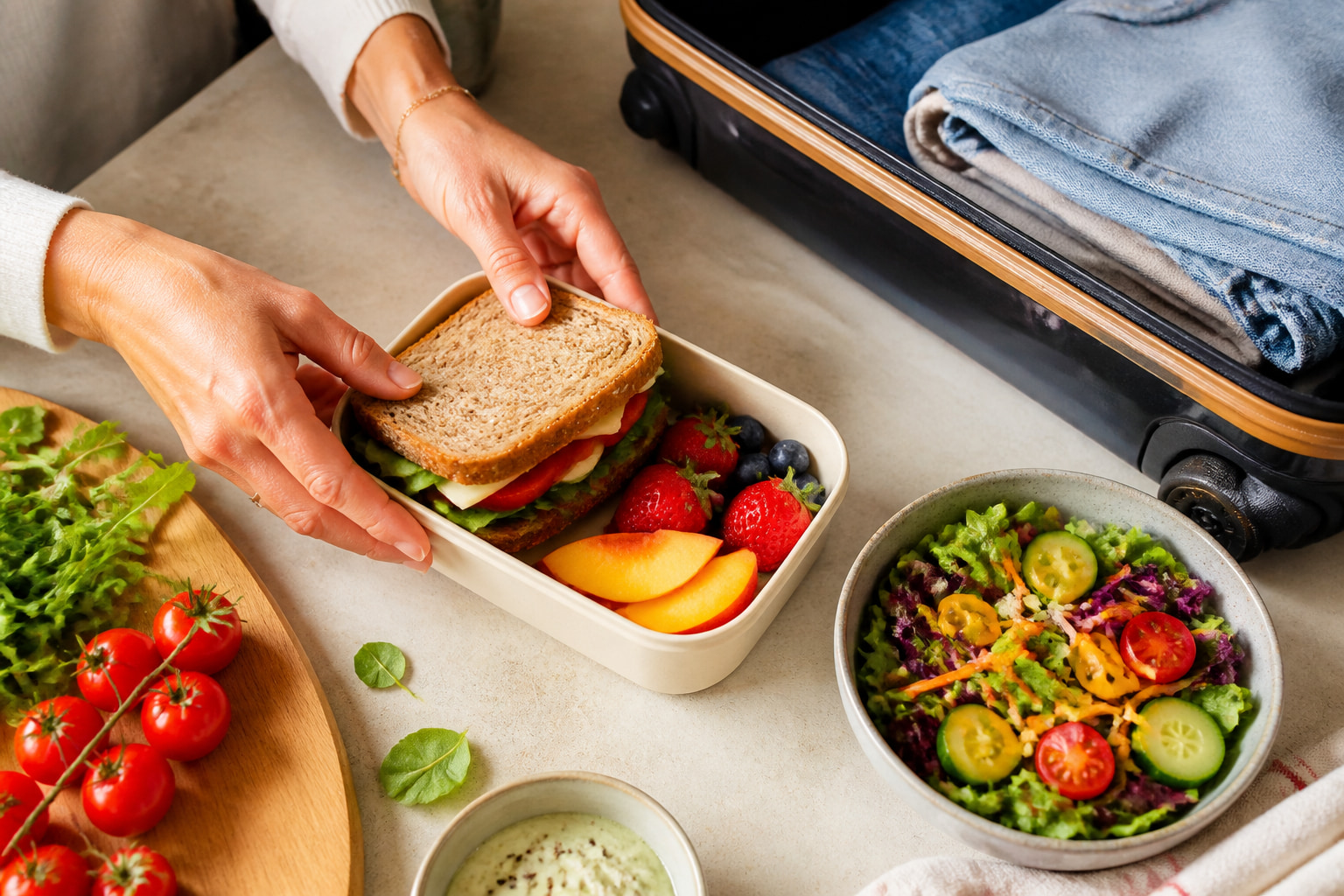
A delay can push lunch back. A meeting can decide what food is available. When the day goes off course, it is easy to judge the whole trip instead of choosing what works for the next meal.
Use a meal compass, plan a backup for predictable gaps and build a routine you can use again.
Look for protein, produce or fiber, a satisfying base and a drink when choosing what is available.
Plan and pack one backup for a predictable gap instead of trying to plan every meal.
Use the restaurant chapter to make a workable choice when the menu is new to you.
Bring the guide's decisions together into a routine for future trips.
The guide has 11 chapters. The first two are shown in full below so you can judge whether the approach fits before buying.
Travel rarely disrupts one thing at a time. An early departure can shorten breakfast, a connection can eat the space where lunch normally sits, and an evening client dinner may arrive after a long stretch of coffee and meetings. Add unfamiliar shops, a delayed bag, late restaurant hours, and food chosen around somebody else’s schedule, and the day can feel like it has already decided what you will eat.
That is why a stricter plan tends to be a poor travelling companion. The useful question is smaller: what is the next food moment likely to be, and what would help you feel fed through it? Sometimes that is a sandwich and an apple before boarding. Sometimes it is eggs, toast, and fruit from the hotel buffet. Sometimes dinner is a bowl of noodles with a vegetable side, enjoyed with the people you came to see.
Planning advice for travellers consistently comes back to the same ordinary moves: notice where long gaps may appear, bring a little food for the journey, and make use of a nearby grocery store or hotel fridge when you arrive. Those moves matter most at transitions, not because an occasional celebratory meal is a problem, but because a long, unplanned gap can make every available option feel urgent.
For frequent work trips, a few familiar defaults are kinder than trying to restart a perfect routine in every city. Keep one backup you will actually eat. Look at the next few hours rather than judging the whole day. If a meeting lunch is thin, you can add something later. If dinner is a local specialty, enjoy it. You are not trying to win travel eating. You are making the next decision a little easier.
General travel guidance cannot replace an individual plan for allergies, celiac disease, diabetes, medication timing, pregnancy, or another health need. If food timing or ingredients affect your treatment, make the travel plan with the clinician who knows your care.
In a new airport or a restaurant where every dish is unfamiliar, you do not need nutrition data to find your footing. Start by looking for a few things that tend to make a meal feel more steady: something with protein, fruit or vegetables or another fibre-rich food, something satisfying to fill you up, and a drink.
Think of this as a quick look around the plate, not a set of portions or a test. Public-health guidance on balanced meals commonly puts vegetables and fruit, protein foods, whole grains, and water in the picture. On the road, the same idea can be loose enough to fit what is actually in front of you.
| If you can see... | It might be... | If it is missing... |
|---|---|---|
| Something with protein | Eggs, yogurt, beans, fish, chicken, tofu, lentils, nuts | Add an egg, yogurt, beans, or a side of fish if one is available |
| Fruit, vegetables, or fibre | Salad, roasted vegetables, fruit, oats, beans, whole-grain bread | Pick fruit from the cooler, order a vegetable side, or keep it for your next meal |
| A satisfying base | Rice, potatoes, toast, oats, noodles, a sandwich, or a grain bowl | Add toast, rice, crackers, or the side that makes the meal feel complete |
| A drink | Water, sparkling water, tea, coffee, milk, or another drink you enjoy | Fill a bottle after security or order a drink with the meal |
A breakfast of yogurt, berries, and oats fits easily. So does a grilled fish plate with rice, greens, and water. A terminal sandwich and an orange can do the job too. In a noodle shop, the anchors might be tofu, vegetables, noodles, and tea. The ingredients change with the place. The glance you take at the meal stays familiar.
Some meals will have only one or two of these things. That is ordinary, especially in transit. A pastry and coffee may be all that is practical at dawn; adding fruit at the next stop is enough. A big restaurant dinner might have everything except a vegetable, and a shared side can cover that without turning the table into a negotiation.
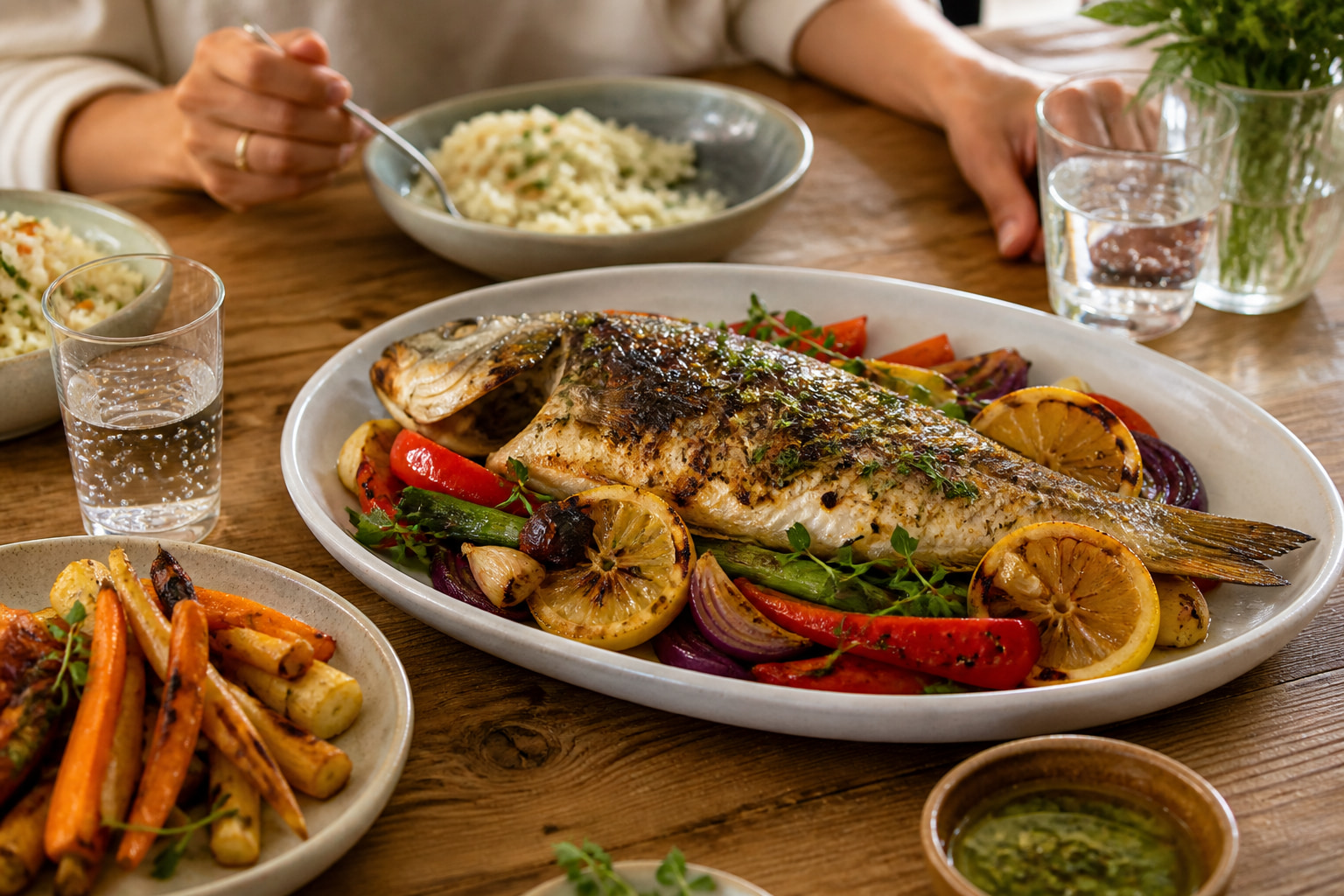
The point is recognition. You are looking for a meal that leaves you full and glad you ate it, then moving on with your day.
You have read chapters 1 to 2 of 11: Why Travel Eating Goes Off Course and The Travel Meal Compass. The rest covers planning, travel stops, hotels, shared meals, restaurants, delays, food safety and a repeatable routine.
Move on from an imperfect meal by deciding what works with the food available now.
Feel more prepared when meals shift by planning one backup for a predictable gap.
Choose what you want intentionally, without treating one dinner as a verdict on your trip.
The 18-page PDF covers airports, hotels, meeting food, restaurants, delays, food safety and personal needs. It closes with a repeatable trip routine.
$3.97
Get the guide18-page PDF · no subscription · works on any device
Without a way to decide, each delay or unfamiliar menu can leave you guessing again.