 Hush Pantry
Quiet, practical food advice
Hush Pantry
Quiet, practical food advice
Hush Pantry
Quiet, practical food advice
Hush Pantry
Quiet, practical food advice
For new meal preppers who want a smaller place to start. An 18-page downloadable PDF.
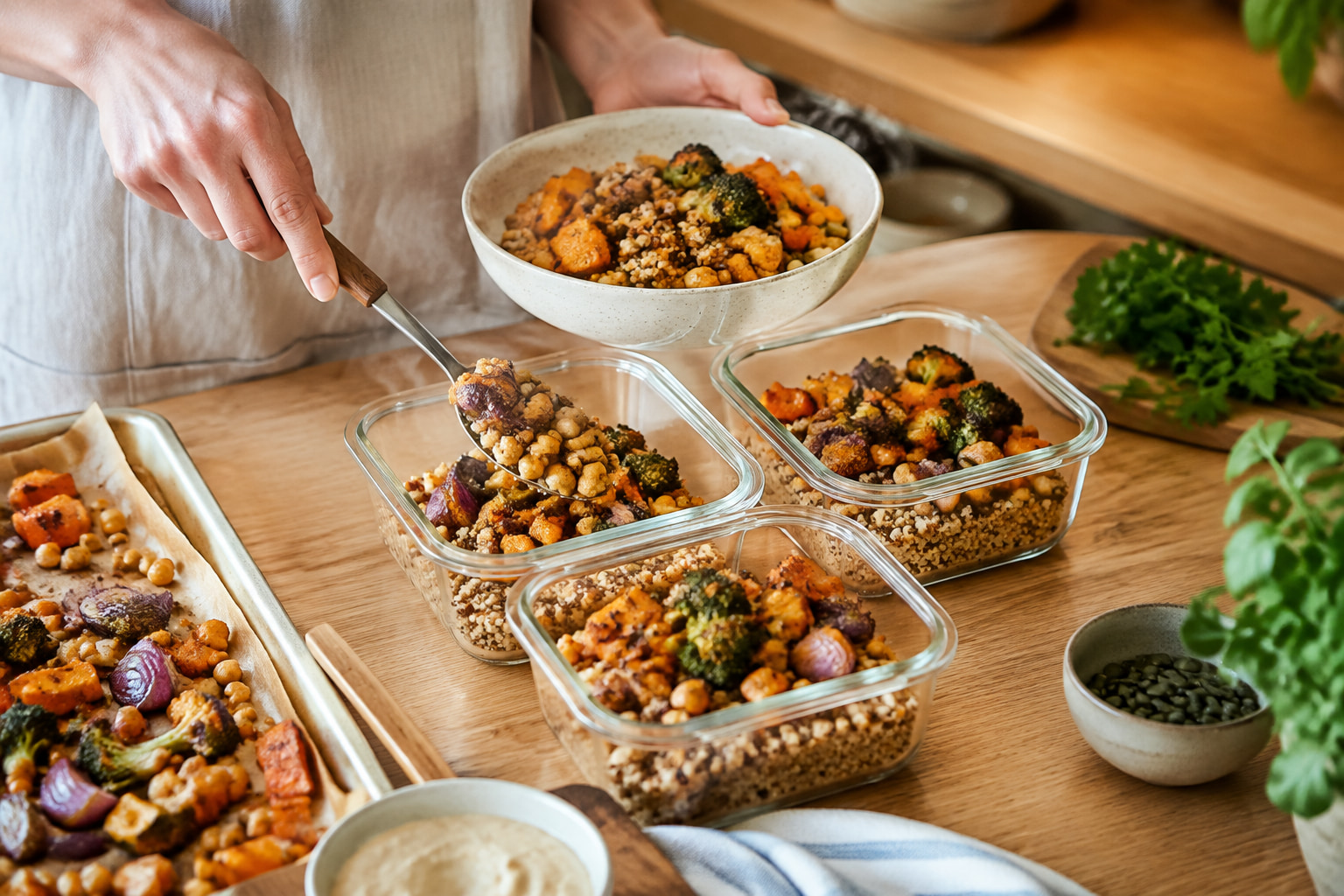
You plan a full week of meals, then the shopping, cooking and containers become a project of their own. If you stop, it can feel like meal prep just isn't for you. Starting with one repeated meal gives you a smaller problem to solve.
Choose one meal, build around two compatible recipes, count portions and label what you store.
Choose one repeated meal and enough portions to address a real weekday need.
Build choice from two compatible recipes without planning a full menu.
Turn the meals and portions you've chosen into a shop you can use.
Count servings before cooking, then match them to your containers.
Work through storing portions and marking their identity, date, destination and eating order.
Look at what went wrong before expanding the routine.
The guide has 10 chapters. The first two are shown in full below so you can judge whether this approach fits before buying.
The plan often begins with a pleasing picture: a clear Sunday afternoon, several recipes, and a refrigerator that will apparently take care of the whole week. Then the chopping begins. There are groceries to unpack, instructions to reread, pans competing for the oven, food to cool, containers to find, and a sink that has quietly become a project of its own.
Meal prep can make later meals easier because it shifts some decisions and cooking earlier. That trade is real. It does not make the work disappear. Harvard's meal-prep guidance also makes room for different approaches and points beginners toward just two or three dinners, which is a much gentler starting point than trying to cover every breakfast, lunch, dinner, and snack.
A large plan has a lot of moving parts. Every extra recipe brings its own ingredients, yield, timing, washing up, storage needs, and chance that it will not taste quite as expected. If several recipes are new, you are also guessing how long they take in your kitchen, how many portions they make, and whether everyone will want the fourth serving on Thursday.
The other problem is that a perfect-week plan has no slack. A late meeting, an invitation out, a craving for something different, or a tired night can leave a carefully packed portion behind. That is ordinary life, not a character flaw. A container that goes uneaten is useful information: perhaps the plan covered too many days, the meal travelled badly, or the food was put somewhere you could not see it.
For the first run, aim for a rehearsal, not a performance. Make the week a little easier in one place. You can learn a surprising amount from two lunches and a modest pot of something fragrant and good.
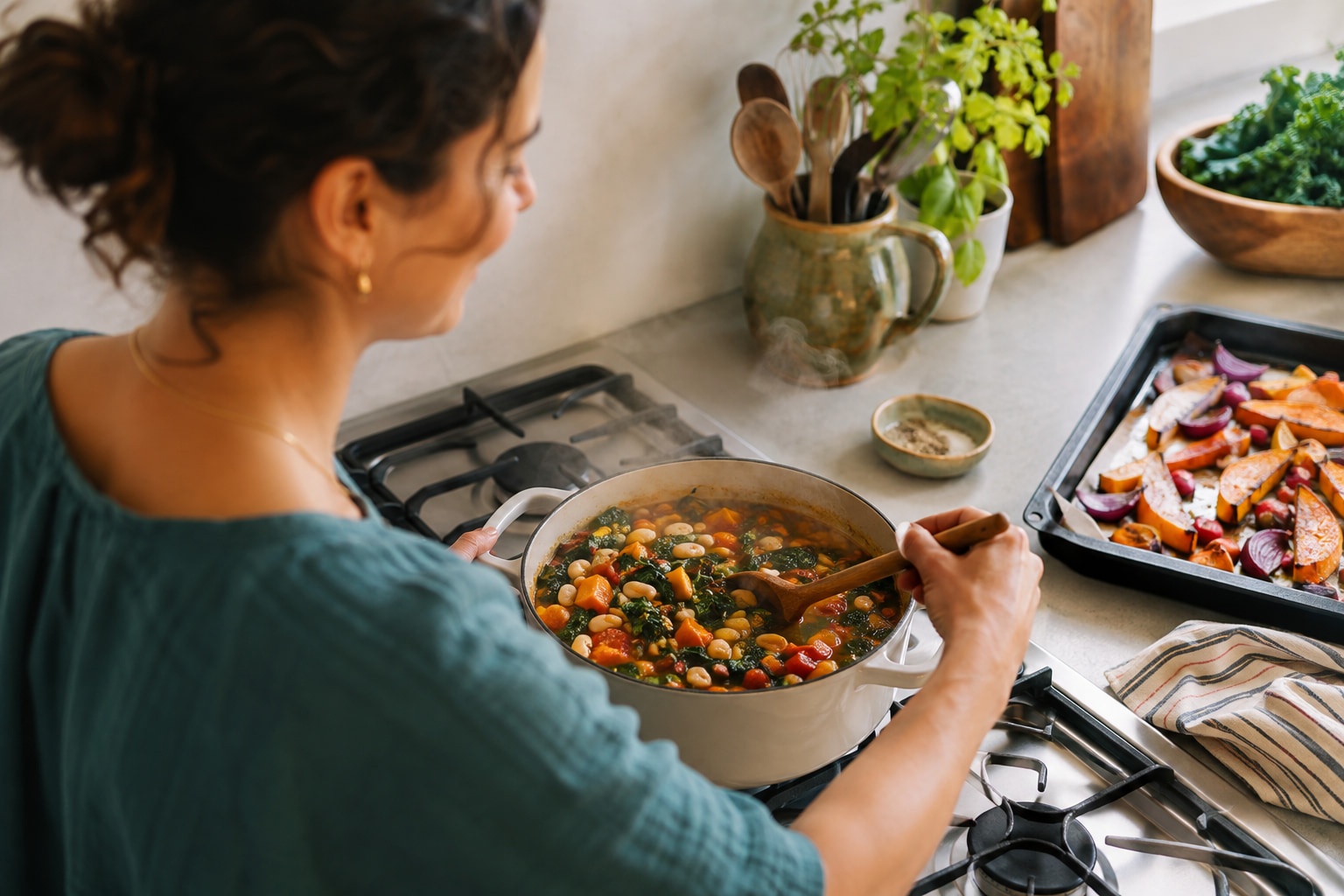
Now make the plan small enough to be useful. Start by naming the moment you would most like help with. Maybe it is the workday lunch that turns into a last-minute sandwich. Maybe it is the 7pm dinner gap, when a warm bowl of rice, beans, roasted vegetables, and a sharp little spoonful of salsa would feel like a gift.
Meal prep can mean several different things. The distinction matters because you do not have to make full meals to get a head start.
| Approach | What you do ahead | What weekday eating looks like |
|---|---|---|
| Meal planning | Decide meals and make a list | You still cook when the time comes |
| Ingredient prep | Wash, chop, or cook a few basics | Dinner comes together faster |
| Component prep | Make flexible foods such as rice, beans, roasted vegetables, or sauce | You combine them in different ways |
| Complete meal prep | Cook and pack ready portions | You grab, heat, and eat |
All four count. Harvard describes meal prep as flexible, and Cleveland Clinic makes the same practical distinction among individual portions, batch cooking, ingredient prep, and freezer meals. Pick the version that solves your actual problem, not the version that looks most impressive on a shelf.
Open your calendar before you open a recipe. Cross off the dinner out, the late work night, the trip, and the evening when someone else is cooking. For a first trial, plan two or three eating occasions. If you want weekday lunches, that might be Tuesday and Wednesday, with one portion in the freezer for later. If dinner is the pinch point, perhaps it is one pot of soup plus a bag of washed greens.
Give the trial a plain success measure. Two packed lunches eaten. One evening with no scramble. No food thrown away. Those are good outcomes because you can see them, and they tell you what to do next.
You've read chapters 1 to 2 of 10: why ambitious prep collapses and how to choose your minimum viable prep. The rest covers recipes, shopping, portions, prep, storage, weekdays, troubleshooting and growth.
Give one weekday meal a plan instead of taking on a full week at once.
Use two compatible recipes so repetition doesn't mean eating the same thing every time.
Count servings first, then label stored food with its destination and eating order.
The 18-page PDF covers choosing a small prep goal, pairing two recipes, shopping, portion and container math, a calm prep session, storage, weekdays and troubleshooting.
$3.97
Start your prep18-page PDF · no subscription · works on any device
A plan that's too big can keep sending you back to the beginning. Try a smaller one built around the weekday meal you need.