 Hush Pantry
Quiet, practical food advice
Hush Pantry
Quiet, practical food advice
Hush Pantry
Quiet, practical food advice
Hush Pantry
Quiet, practical food advice
A downloadable 34-page PDF for plant-curious beginners who want to build ordinary meals with less guesswork.
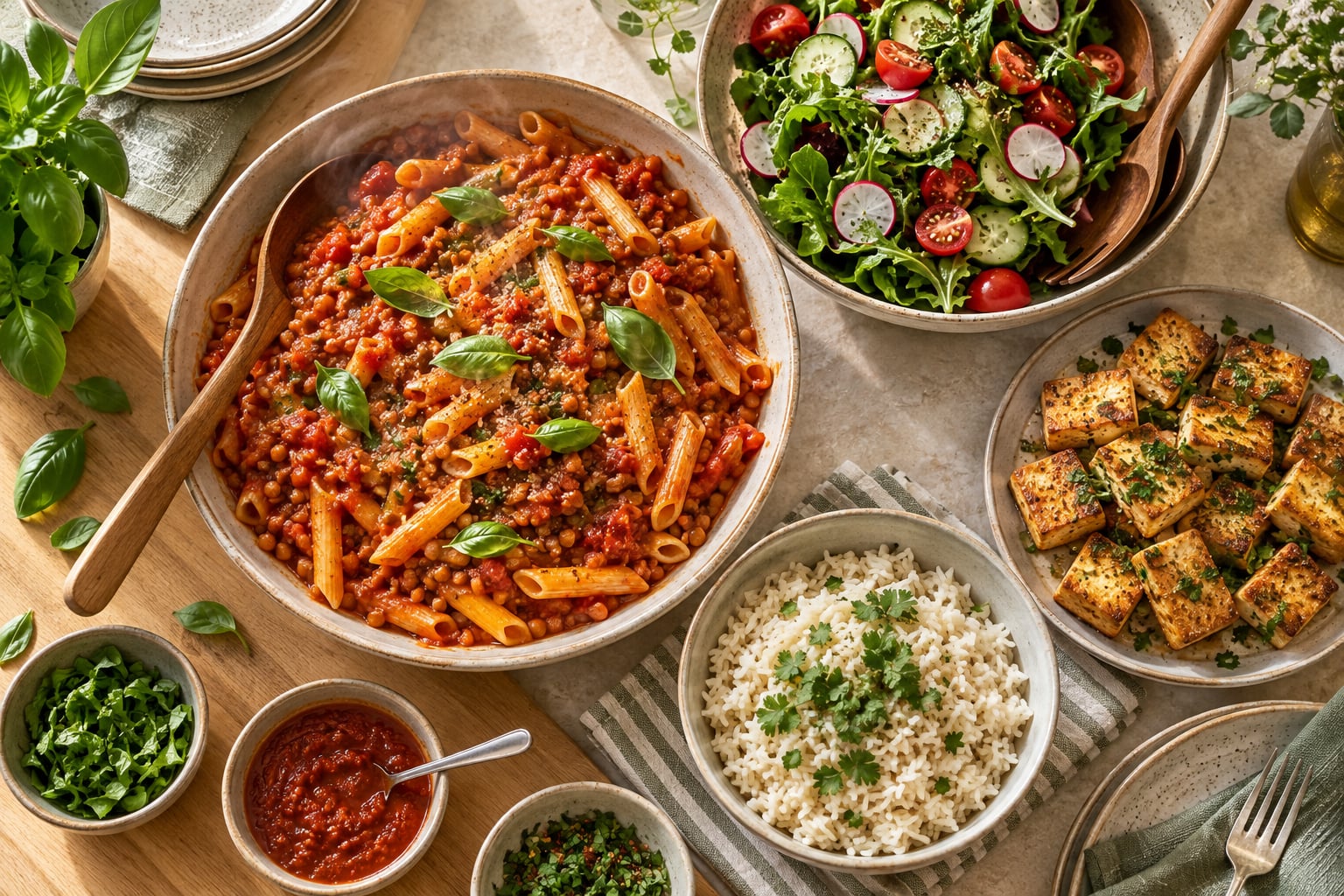
You want to eat more plant protein, but it can be hard to know what to put on the plate. Trying to pair foods perfectly at every meal adds another decision to dinner. You need a starting point that works with familiar foods.
Start with a protein anchor, use a familiar meal format, then look at variety across the day.
Start with one recognizable protein food, then add familiar, satisfying foods around it.
Get to know plant protein staples before choosing what fits your meals.
Use an anchor, familiar format, produce, flavor and a satisfying finish to put a meal together.
Look across the foods you eat in a day instead of trying to perfect each plate.
The guide has 10 chapters. The first two are shown here in full, so you can judge whether this approach fits before buying.
You may already know what dinner is: pasta with jarred sauce, a frozen vegetable stir-fry, or the soup that has been sitting in the cupboard. Keep that plan. The quickest way to make it a more substantial plant-protein meal is to ask one plain question: what is the main protein here?
That answer is your protein anchor. It is the food doing most of the protein work, rather than a small garnish scattered over the top. Beans, lentils, tofu, tempeh, edamame and seitan can all take that place. Peas and substantial soy foods can too. Nuts and seeds add protein, but a spoonful is usually more of a tasty finish than the main event.
You are not trying to rebuild the whole plate around a special “protein recipe.” You are giving the dinner you already wanted a steady centre.
Half a cup of beans commonly brings around 6 to 9 grams of protein, according to Cleveland Clinic’s overview, so beans are doing much more than adding colour. Tofu, tempeh and edamame are also substantial choices. Grains and vegetables contribute some protein in the background, but it helps to have something you can actually name at the centre of a main meal.
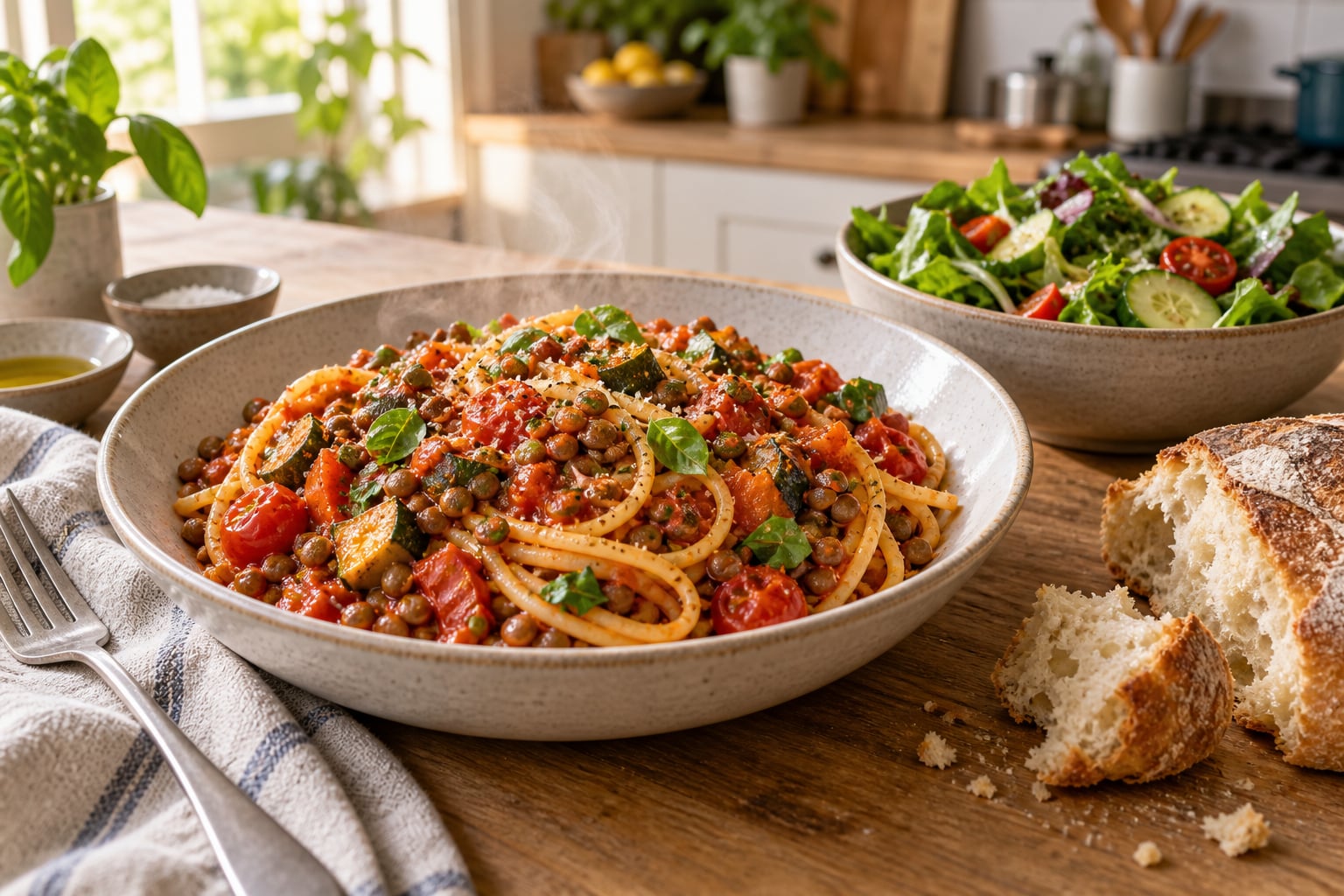
Pasta that was going to be pasta anyway. Warm ½ to 1 cup of drained canned cannellini beans or lentils in jarred tomato sauce, then fold through cooked pasta. A handful of spinach can wilt in the same pan. Finish with olive oil, black pepper and grated cheese or nutritional yeast if you like it. The beans soften into the sauce, especially if you crush a few against the side of the pan.
The freezer-bag stir-fry. Cut a palm-sized piece of firm tofu into bite-size cubes. Brown it in a little oil before adding the frozen vegetables, or cook it separately if the pan is crowded. Add noodles or microwave rice, then finish with a sauce you enjoy. Bottled teriyaki, chilli crisp with a splash of soy sauce, or peanut butter loosened with hot water can all get dinner over the line.
Soup with more staying power. Fold ½ to 1 cup of cooked lentils into tomato, vegetable or minestrone soup. Red lentils disappear into a thick soup as they cook; canned or already-cooked brown and green lentils keep more of their shape. Add toast, crackers or a baked potato according to how hungry you are.
These quantities are starting places, not serving rules. A half cup may fit a lighter meal; a full cup may fit a hungrier evening. Packaged tofu and other prepared foods vary, so the serving on the label is a useful reality check when you want one.
If tonight’s meal already contains eggs, dairy, fish or meat, a plant food can still join it. Lentils can stretch a meat sauce, chickpeas can sit beside roast chicken, and edamame can go into a noodle bowl. “More plant protein” does not require everyone at the table to eat the same way.
Start with one anchor you will genuinely eat. A creamy chickpea sandwich that gets made is far more helpful than a complicated recipe waiting for the right evening.
Rice and beans are lovely together: soft grains, creamy beans, something sharp and crunchy on top. They also happen to complement each other nutritionally. What they do not need to become is a compulsory double act at every sitting.
Protein is made from smaller building blocks called amino acids. Your body can make many of them, but nine are called essential amino acids because food has to supply them. During digestion, the protein you eat is broken into amino acids that the body can use to build and repair tissue and make its own proteins.
“Complete protein” describes a food that supplies all nine essential amino acids in adequate proportions. “Incomplete” means one or more is present in a lower proportion. Those words describe the amino-acid pattern of a food. They do not mean that one food is whole and nourishing while another is defective.
Many animal foods and soy foods are described as complete proteins. Beans, lentils, nuts, seeds, vegetables and many grains tend to have lower proportions of one or more essential amino acids. That is where the old advice to combine particular plant foods at each meal came from.
For healthy adults eating enough food from a varied range, the practical advice is much calmer. MedlinePlus says essential amino acids do not have to be eaten at every meal and that the balance across the whole day matters more. Cleveland Clinic likewise advises getting a range of protein foods over the day rather than requiring a complete source at each meal.
So lunch might be lentil soup with bread, dinner might be tofu and noodles, and breakfast might include oats and peanut butter. Each food brings its own mix. Across the day, those mixes overlap.
This does not make rice and beans nutritionally meaningless. Grains and legumes have different amino-acid strengths, so they are called complementary proteins. They are also inexpensive, familiar and genuinely good together. Eat them in the same bowl because you want to, not because a clock starts ticking when you swallow the rice.
Variety can be modest. It can mean chickpeas at lunch and tofu at dinner, or lentils one day and black beans the next. It does not require nine separate ingredients or constant novelty. A person who happily eats the same bean chilli twice has not broken the principle.
“Eat a variety across the day” is broad guidance for generally healthy adults. It is not a way to calculate individual needs. Age, activity, recovery from illness, pregnancy, poor appetite and some medical conditions can change how much protein or energy a person needs. A very limited diet can also leave fewer chances for foods to cover one another’s amino-acid patterns.
If you are struggling to eat enough, losing weight without intending to, recovering from illness, feeding a child with a tightly restricted diet, or managing a medical condition, a clinician or registered dietitian can look at the whole situation. The answer is individual support, not stricter rice-and-bean timing.
For everyday meals, keep the simpler thought: put a recognizable protein food on the plate, eat more than one kind over time, and let dinner taste like dinner.
You’ve read chapters 1 to 2 of 10: “Put a Protein Anchor on Tonight’s Plate” and “Why Perfect Pairing Is Not the Job.” The rest covers protein context, pantry staples, the meal matrix, shopping, daily variety and troubleshooting.
Choose a protein anchor first, then build the rest of the meal with foods you recognize.
Think about variety across the day rather than matching amino acids at every meal.
Keep protein figures in perspective without turning every meal into a tracking task.
The 34-page PDF covers protein anchors, the plant protein pantry, an everyday meal matrix, shopping by use and price, variety across a day, and ways to troubleshoot and start small.
$3.97
Get the meal guide34-page PDF · no subscription · works on any device
Without a place to start, dinner can stay a question of what to pair with what. Start with one protein anchor instead.