 Hush Pantry
Quiet, practical food advice
Hush Pantry
Quiet, practical food advice
Hush Pantry
Quiet, practical food advice
Hush Pantry
Quiet, practical food advice
For adults who want flexible portion guidance. A downloadable 17-page PDF.
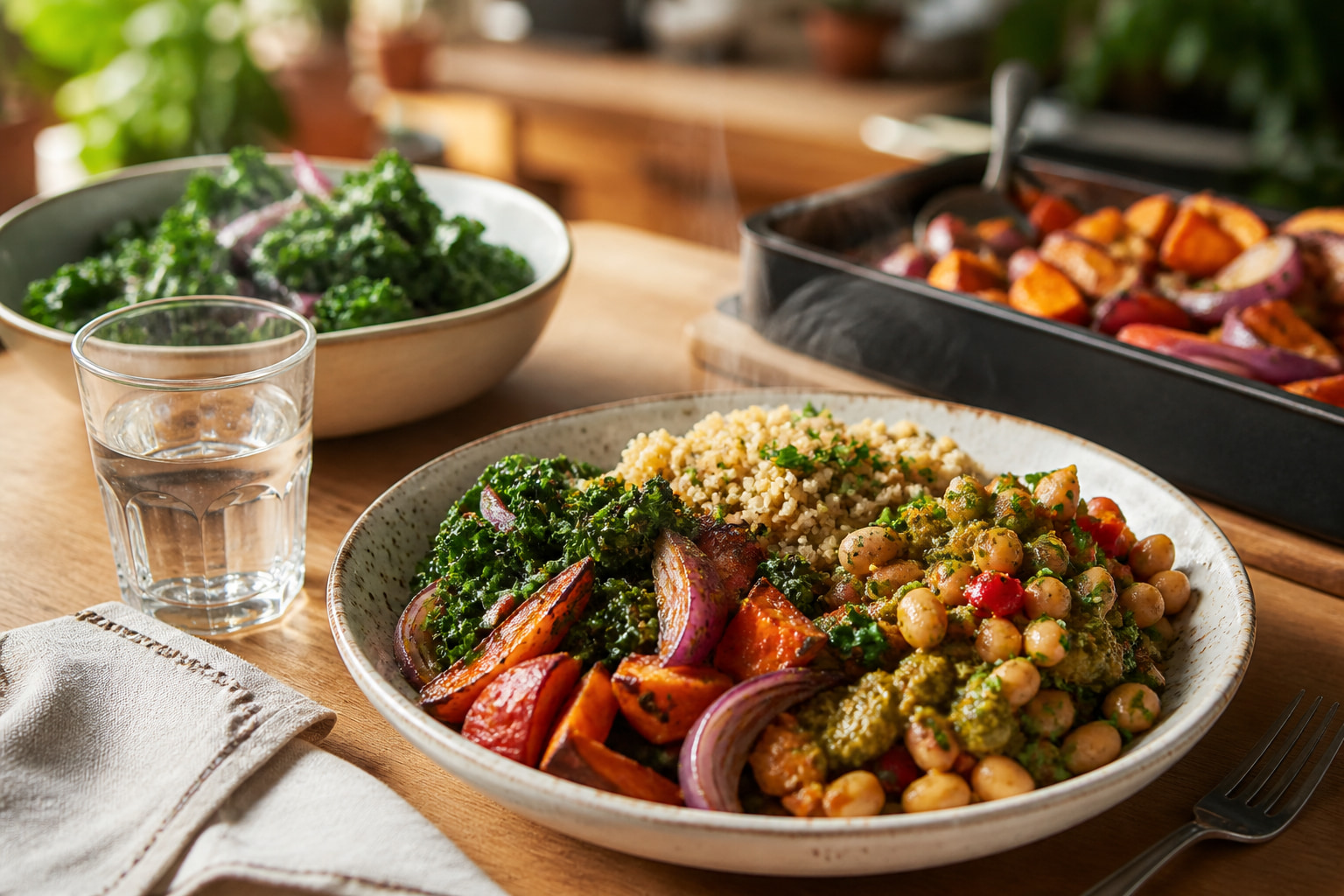
A label gives you a serving size, but you still have to decide what to put on your plate. Bowls, sandwiches, and takeaway meals make that harder to judge by eye. You want a useful starting point without treating every portion as a limit.
Start with hands and familiar dishes, build the meal, then use appetite to decide what feels like enough.
Use hands and familiar dishes as starting cues when you do not have a scale.
Think through the meal components before fine tuning their amounts.
Relate a listed serving to the portion you choose.
Practice estimating, noticing, and adjusting over seven days.
The guide has 11 chapters. The first two are shown in full below so you can judge whether this approach fits before buying.
Picture the moment a restaurant plate lands in front of you: hot fries spilling beside the entrée, a shiny sauce, perhaps bread already on the table. It is easy for that amount to become the picture in your head of a normal dinner. At home, a wide bowl, a family-size bag, or a pan on the stove can do the same thing more quietly.
That is not a character flaw. Research reviews find that people tend to select and eat more when they are offered larger portions or packages. Another set of experiments found that repeated images of large portions could shift what participants judged to be a normal amount. What you see often can become your reference point before you have had a chance to ask what you actually want.
Tableware may play a part too, but the evidence is much less settled than the evidence on larger offered food and packages. A smaller plate is therefore not a magic fix. It may be handy if it helps you see a meal clearly, but it cannot decide dinner for you.
A better aim is to collect a few references you can use anywhere: the amount you serve first, the bowl in your hand, the label on a packaged food, and how your body feels after a few minutes of eating. They give you a place to begin. You can always have more.
The word serving gets asked to do too much work. On a Nutrition Facts label, it is the amount used as the base for the numbers you see. A portion is the amount you choose to eat at one time. A restaurant order is what the kitchen sells. A recipe yield is what comes out of the pot. Those are all real quantities, but they answer different questions.
The FDA says label serving sizes reflect what people typically eat or drink, not a recommended amount. That matters because a label can be excellent for understanding what is in the amount you ate, without telling you what dinner needs to look like. A package may hold several servings. A large ready-to-eat package may show information both per serving and for the whole package.
When you see a number, pause long enough to name it. Is this a label reference? The whole package? The amount in your bowl? That small bit of sorting clears up a surprising amount of confusion.
Then use a simple rhythm: estimate, eat, notice, adjust. Serve an amount that looks like a reasonable start. Eat without rushing if you can. Notice whether you are still hungry, comfortably satisfied, or physically uncomfortable. If you want more, take more. A second helping can be exactly the right adjustment, especially when the first amount was only a guess.
People do not need identical amounts. Appetite, activity, age, health, body size, what you ate earlier, and what the rest of the day holds can all change the picture. The label gives you clear arithmetic. You decide what fits this meal.
You have read chapters 1 to 2 of 11: why normal portions are hard to see, and how serving, portion, and enough differ. The rest covers appetite, visual cues, meals, labels, everyday portions, and a seven day calibration.
Use hands and familiar dishes to estimate an amount without weighing it.
Compare the listed serving with the amount you actually eat.
Use hunger and comfortable satisfaction as feedback, not a score.
The 17-page PDF covers visual cues, meal components, labels, home portions, bowls, snacks, drinks, takeaway food, and adjustments for the person and the day.
$3.97
Get the guide17-page PDF · no subscription · works on any device
Without a way to estimate and adjust, serving sizes and unfamiliar dishes can keep leaving you unsure what to choose.