 Hush Pantry
Quiet, practical food advice
Hush Pantry
Quiet, practical food advice
Hush Pantry
Quiet, practical food advice
Hush Pantry
Quiet, practical food advice
For busy adults who want less prep at dinnertime. A downloadable 15-page PDF.
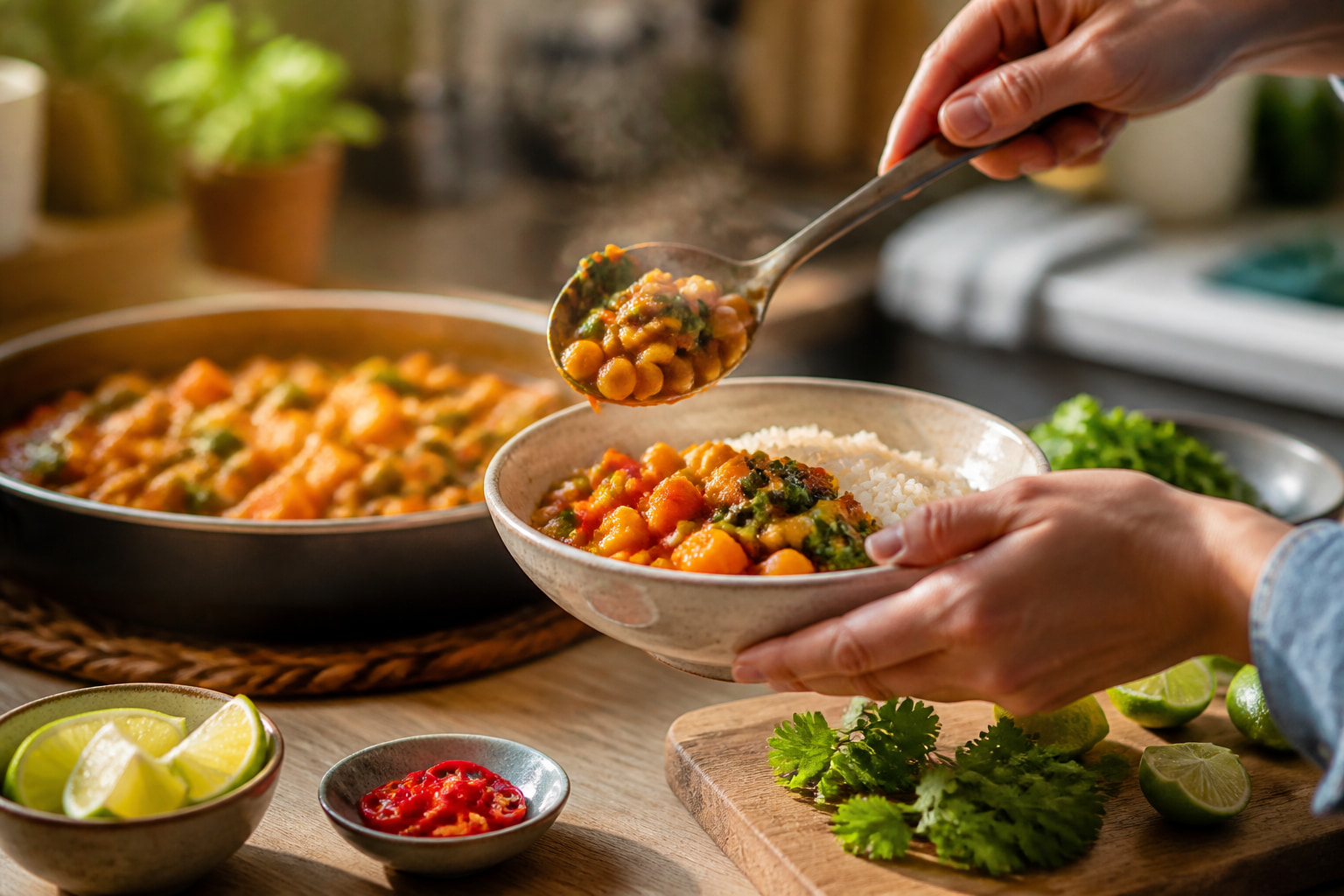
You reach the kitchen tired and still have to decide what to make. If the ingredients you have need more prep than you can manage, dinner stalls before it starts. A little planning ahead can give you easier options.
Use a four-part meal formula, keep workable foods on hand, and scan what needs restocking each week.
Combine produce, protein, a satisfying base, and flavor or fat to make a meal from what you have.
Choose foods you will eat that store well and fit your equipment and budget.
Scan what you have and restock meal parts before you need them.
Use the meal parts you've kept on hand to assemble dinner with less prep.
Adjust the approach to your constraints and return to it when a week doesn't go to plan.
The guide has nine chapters. The first two are shown here in full, so you can judge whether the approach fits before you buy.
A crowded day can make dinner feel like one big problem, but it is usually a string of small ones. Lunch ran late. You got home hungry. The vegetables are there, somewhere, but the protein is not obvious. A pan needs washing. Someone wants an answer now. The nearest visible option wins, and it is often a drive-through window, a delivery app, or nothing at all.
Time matters, of course. In a USDA study of SNAP participants, 30 percent reported a lack of time to cook from scratch as a barrier to a healthy diet. Other barriers in the same study included cost, transport, and not having room to store fresh or cooked food. That is a useful reminder that dinner trouble is not a character flaw, and it is not solved by scolding yourself into being more organized.
The part to notice is decision time. A meal can take ten minutes at the stove and still be impossible if it asks you to make six choices first: what sounds good, what is safe to use, what is missing, what pan to use, what will everyone eat, and whether the cleanup feels worth it. When you are already tired, each little question makes the easy outside option look smarter.
Change what is visible before you change your expectations of yourself. Put a bowl of fruit where you walk in. Keep eggs, yogurt, or a ready protein where you can spot them. Give the freezer vegetables a dependable shelf. Leave a few meals so obvious that they almost choose themselves: toast with eggs and tomatoes, rice with beans and salsa, soup with greens stirred in at the end. These are not grand plans. They are ways to make the next step smaller.
Try a two-day friction audit. No judgment, just a quick note in your phone when eating goes sideways:
Patterns show up quickly. If the issue is a bare fridge on Wednesdays, you need a midweek backup. If it is the pan in the sink, a cold meal or microwave option earns a place. Start there. A meal that works on a tired Tuesday is more valuable than an ambitious one that only works on your best day.
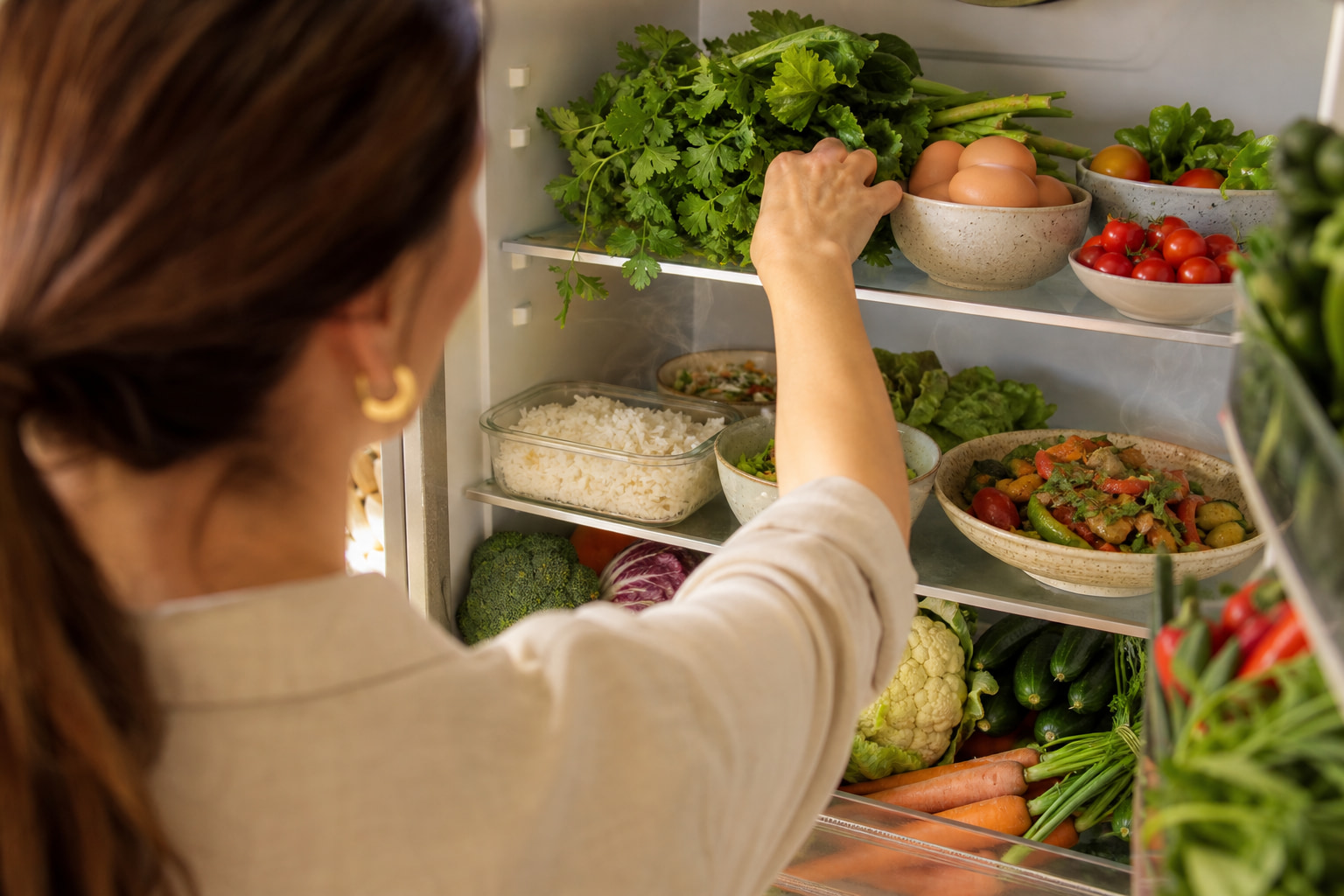
Once the next step is visible, you need a simple way to turn it into food that feels like a meal. Here is the handiest version: start with produce, add protein, include something filling, then finish with flavour or fat. Put a glass of water, tea, or another unsweetened drink beside it if that suits you.
This is a loose guide, not a plate inspection. Some meals will lean more heavily on one part than another. A bowl of lentil soup may carry its own protein and filling base. Toast with a fried egg, sliced tomato, and olive oil can be exactly right. The point is to notice what is missing before you sit down, especially if you know you will be hungry again soon.
Produce brings colour, crunch, sweetness, or a bit of green relief. It might be frozen broccoli, bagged salad, baby spinach, peppers from a jarred antipasto mix, an apple, or berries stirred into yogurt. Harvard's Healthy Eating Plate uses vegetables and fruits as a major part of its visual guide and encourages variety. In this kitchen, the easiest version counts.
Protein is the bit that helps a quick meal hold up. Eggs, beans, lentils, yogurt, tofu, fish, chicken, nuts, and seeds can all work. A can of chickpeas warmed with garlic and lemon is dinner territory, not a sad substitute. Protein does not need to arrive as a large piece of meat in the middle of the plate.
A satisfying base is the thing that makes the meal feel settled: rice, potatoes, oats, noodles, bread, tortillas, or another grain you enjoy. Whole-grain bread, oats, brown rice, and whole-wheat pasta are common options in mainstream dietary guidance, but white rice or ordinary pasta can still be part of dinner. Use what you have and add the other parts around it.
Flavour or fat makes the whole thing worth eating. Olive oil, avocado, cheese, tahini, peanut butter, pesto, salsa, a crisp pickle, lemon, hot sauce, herbs, or toasted seeds can wake up food that would otherwise feel unfinished. A little creamy, salty, bright, or spicy contrast is often the difference between “fine” and “I would make that again.”
Here are a few ways those parts can show up without a recipe:
| Where you are eating | Produce | Protein | Satisfying base | Finish |
|---|---|---|---|---|
| Pantry shelf | tomatoes, roasted peppers, fruit cup | beans, lentils, tuna | oats, crackers, rice | olive oil, nuts, hot sauce |
| Refrigerator | greens, carrots, fruit | eggs, yogurt, tofu, leftover chicken | bread, tortillas, cooked rice | cheese, pesto, dressing |
| Freezer | peas, spinach, mixed vegetables, berries | edamame, cooked beans | microwave rice, frozen potatoes | herbs, lemon juice, seeds |
A bowl can be warm rice, peas, beans, and salsa. A wrap can be hummus, crunchy cabbage, leftover chicken, and something sharp like pickled onions. Breakfast can be yogurt, oats, berries, and nuts. Soup can become dinner with beans, frozen spinach, and a piece of toast. The shape changes, but you are looking for the same few things.
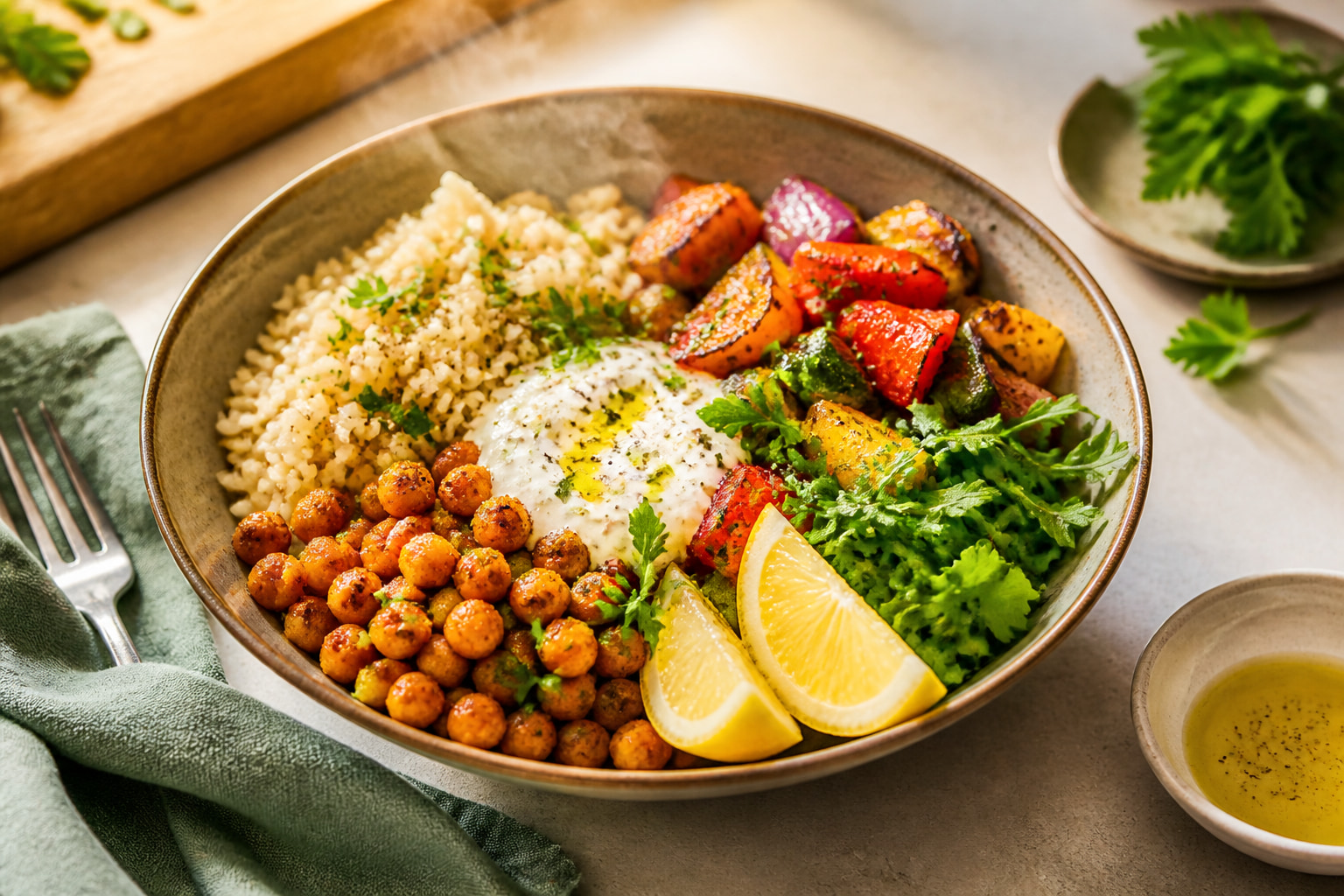
Keep the question kind and practical: what could make this a little more filling, fresh, or delicious? An egg, a handful of greens, or a spoonful of sauce is often enough. You are building a dinner you want to finish, not passing a test.
You've read chapters 1 to 2 of 9: why dinner fails before you reach the kitchen and the four-part fast meal. The rest covers convenience, stocking food, the weekly reset, assembly, constraints, safe shortcuts, and broken plans.
Start with four meal parts instead of trying to think up a recipe from scratch.
Stock foods you'll eat that suit your storage, equipment, and budget.
Use the short scan and restock routine to see which meal parts you need.
The 15-page PDF covers the four-part meal, a minimum-prep food supply, a weekly scan and restock, meal assembly, real-life constraints, and what to do when the plan breaks.
$3.97
Get the guide15-page PDF · no subscription · works on any device
Without a few usable meal parts on hand, dinner can keep starting with the same question: what can I make right now?