 Hush Pantry
Quiet, practical food advice
Hush Pantry
Quiet, practical food advice
Hush Pantry
Quiet, practical food advice
Hush Pantry
Quiet, practical food advice
For cost-conscious households getting started with meal planning. An 18-page downloadable PDF on shopping, storing, cooking and reusing food.

The checkout total keeps climbing, but choosing the cheapest item does not always help if some of it goes uneaten. Planning meals without checking your kitchen first can make shopping harder than it needs to be. You need a way to connect what you have, what you buy and what you will cook.
Work from inventory to meals, then use what is urgent and adjust the plan when you shop again.
Combine a plant or fruit, protein and an energy base, with flavor if you want it.
Consider usable servings, storage and whether you are likely to eat the food before choosing.
Build around food that earns its space and keep urgent items visible so you can use or freeze them first.
Shop with a plan that can bend when what is available or useful changes.
Follow a week of decisions from checking the kitchen through putting meals together.
The guide has 11 chapters. The first two are shown here in full so you can judge whether the approach fits before buying.
A grocery budget gets squeezed in more ways than a rising price tag. Maybe there is only one small freezer drawer. Maybe the good store is a bus ride away, or dinner has to happen between work, school, and a tired evening. Maybe a large bag is cheaper per ounce but it will sit in the cupboard because nobody at home wants it. None of that is a character flaw. It is simply the real shape of shopping.
The most helpful shift is to stop treating every trip as a hunt for the perfect deal. A bargain that is forgotten in the crisper, or a random ingredient that needs three more purchases to become dinner, is not much of a bargain. The USDA's budget guidance puts planning, comparing, and preparing together for a reason: what happens after the checkout matters as much as what is in the cart.
Think of your kitchen as a short chain of decisions. First, see what is already there. Then choose a few meals that fit the week, buy the missing pieces, put them where you will notice them, and give cooked extras a next destination. One link makes the next easier. A pot of rice can be dinner tonight, fried rice tomorrow, and a quick egg-and-rice bowl when the plan falls apart.
It helps to keep food in three loose layers. Dependable staples are the things you return to: oats, rice, beans, pasta, potatoes, eggs, or whatever your household uses often. Rotating fresh food is the produce, dairy, bread, and other shorter-lived food you buy in a realistic amount. Flexible flavour makers are the modest things that stop meals tasting the same: onions, garlic, tomatoes, herbs, spices, lemon, sauces, or peanut butter. The exact list is yours. This is a way to make ordinary food easier to turn into something you want to eat.
A list and a plan do not need to be rigid. The point is to leave the store with food that has somewhere to go, including a fallback for the night when cooking is the last thing you want to do.
Once you have decided that the cart needs a plan, give that plan a very uncomplicated shape. You do not need a prescribed menu or a plate that looks the same every night. For everyday meals, aim to include four things when you can: a fruit or vegetable, a protein food, something that makes the meal filling, and a little flavour or fat.
The familiar food-group guidance points toward fruits and vegetables, grains, protein foods, and dairy or fortified soy alternatives. That is useful background, but at 7 p.m. the shorter version is easier to use. A bowl of warm rice, black beans, frozen corn, and salsa covers a lot of ground. So does a baked potato with broccoli, an egg, and a spoonful of yogurt. Oats with peanut butter and a banana can carry breakfast farther than a pastry eaten in the car.
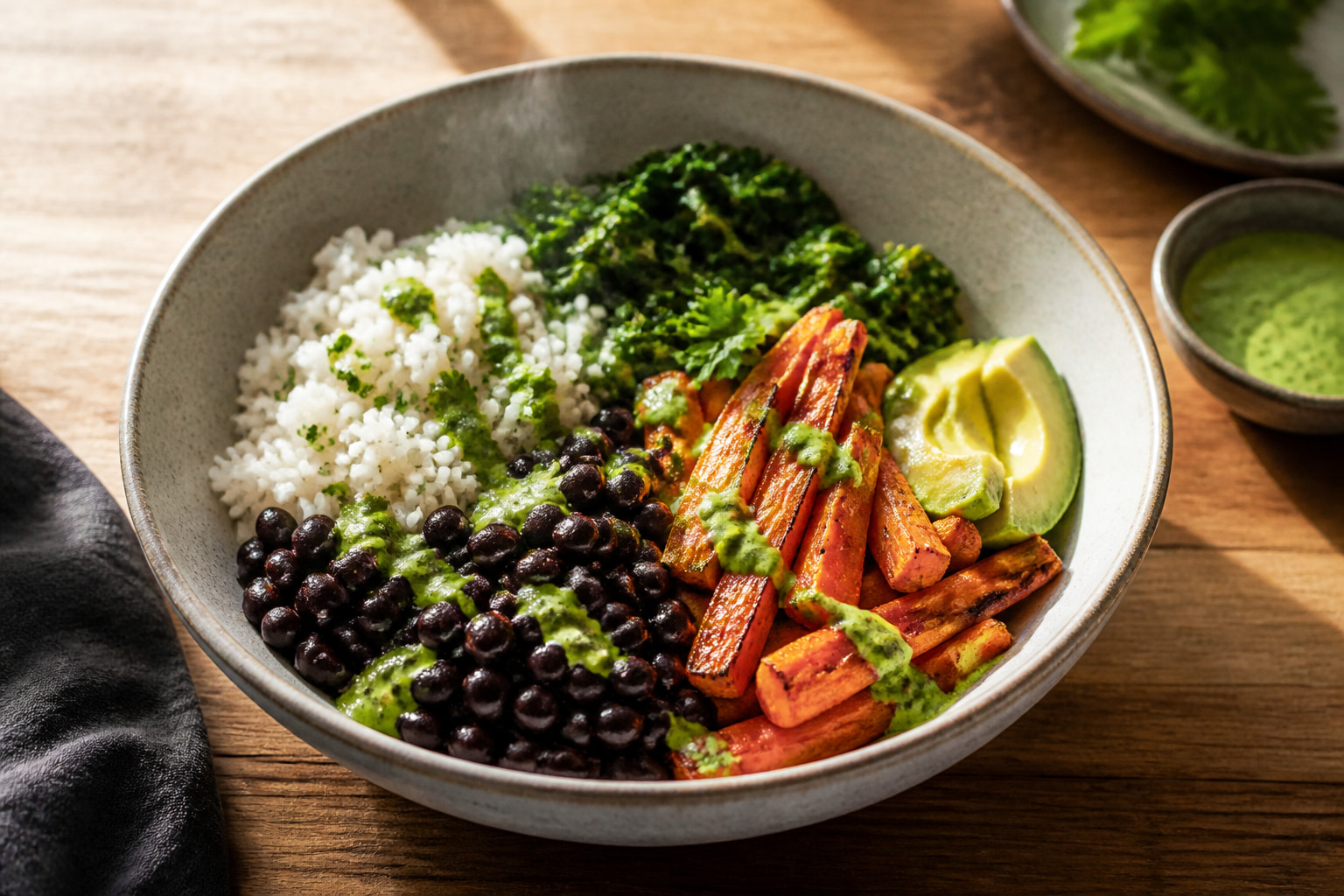
Protein foods do not have to mean a costly piece of meat. USDA guidance includes beans, peas, lentils, eggs, seafood, nuts, seeds, and soy foods in that group. Beans and lentils are especially handy because they work in soup, tacos, pasta sauce, grain bowls, and salads. Eggs cook fast. Canned fish can be useful when you enjoy it. Peanut or seed butter gives toast or oats a little staying power. Pick the options your household will actually eat.
For the filling part, oats, bread, rice, pasta, tortillas, potatoes, and other grains or starchy foods all have a place. Whole-grain choices can bring more fibre, but white rice or regular pasta can still be dinner. The budget move is not to chase a perfect ingredient. It is to pair the food you have with something colourful and something protein-rich often enough that meals feel satisfying.
Fruit and vegetables can arrive fresh, frozen, or canned. A bag of frozen broccoli that gets used is more helpful than fresh broccoli that becomes a science project in the back of the fridge. Choose plain frozen vegetables when that suits your cooking. With canned items, the Nutrition Facts label lets you compare sodium, added sugar, and sauces if those details matter to you.
Use this as a gentle check, not a scorecard. A snack might be fruit and yogurt. Lunch might be leftover lentil soup with bread. A stir-fry can be mostly vegetables with noodles and tofu. Some meals will be simpler. The next meal is another chance to add what was missing, and dinner can still be warm, cheap, and genuinely good.
You have read chapters 1 to 2 of 11: "When the Checkout Total Keeps Climbing" and "Set a Simple Nutrition Floor." The rest covers value, inventory, storage, meal planning, shopping, preparation, leftovers and a worked week.
Start with your kitchen inventory, then make a list based on what your meals need.
Look beyond the sticker price to servings, storage and the chance you will eat it.
Keep it visible and decide what to use or freeze before it gets overlooked.
Prepare components for several meals and treat leftovers as part of the plan.
For $3.97, the 18-page PDF covers a simple nutrition floor, grocery value, kitchen inventory, pantry and freezer planning, flexible lists, meal components, leftovers and a worked week.
$3.97
Get the guide18-page PDF · no subscription · works on any device
Without a plan for what you have and what you will use, the grocery list can keep starting from scratch.