 Hush Pantry
Quiet, practical food advice
Hush Pantry
Quiet, practical food advice
Hush Pantry
Quiet, practical food advice
Hush Pantry
Quiet, practical food advice
For college students with no kitchen, a mini fridge, or a microwave. A downloadable 29-page PDF for building meals in a small space.
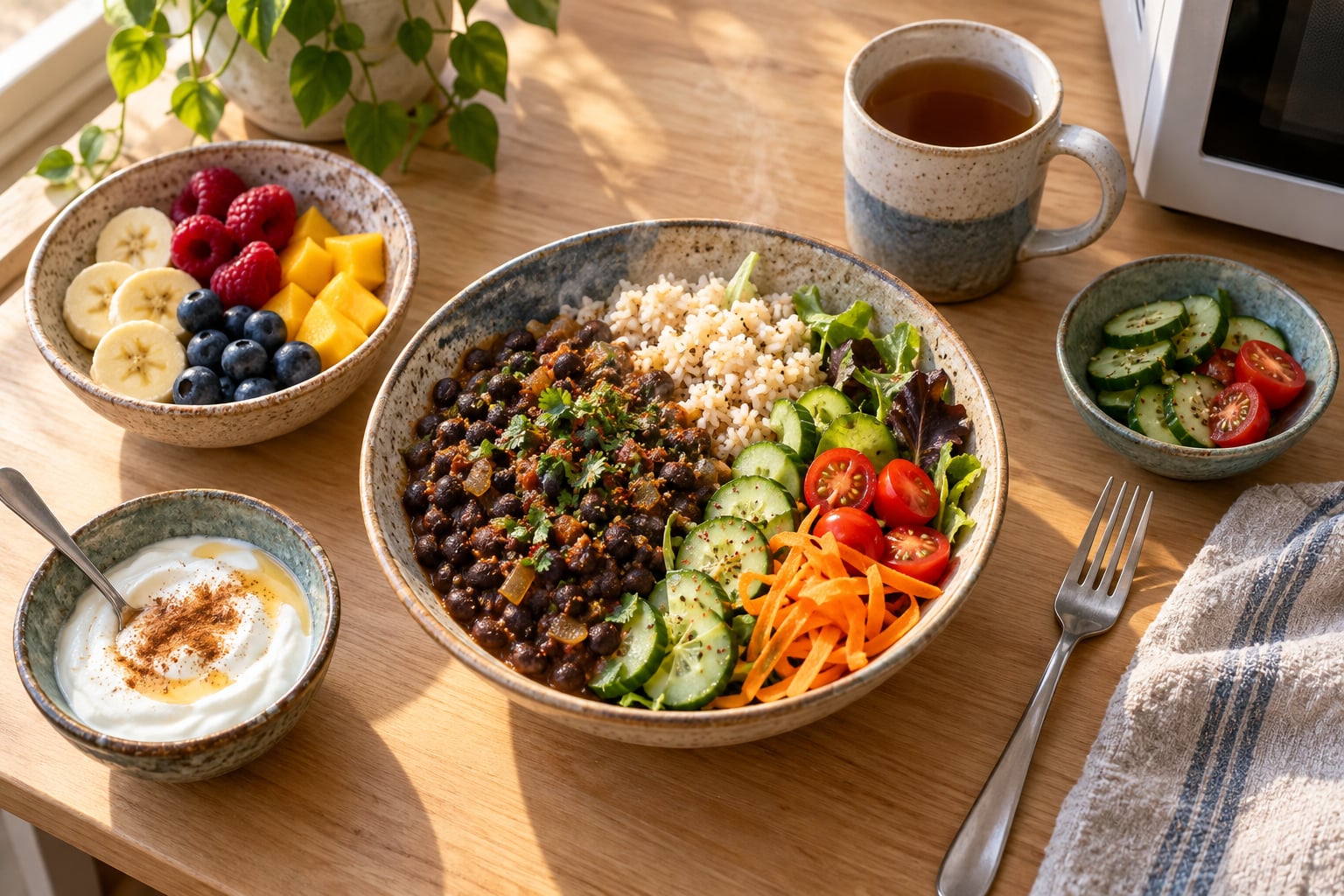
It is hard to shop for meals when you have little storage and nowhere to cook. You might buy more than you can finish or end up with foods that do not make a meal together. Start with what your room permits, then choose foods you can store, prepare, and eat there.
Check your space, choose four useful meal parts, shop in small amounts, and handle food with care.
Work out what housing permits and what you can store, heat, wash, and finish in your room.
Combine protein, produce, a sustaining carbohydrate, and flavor or fat, guided by your appetite.
Choose versatile foods in small amounts, then restock what you actually finish.
Consider temperature, time, clean handling, and reheating when you use perishable food.
Use the guide's first-week section to put your meal components and shopping approach into practice.
The guide has 10 chapters. The first two are shown here in full, so you can see how it approaches your room and your meals before deciding if the rest fits.
Before you buy a microwave, a case of soup, or a heroic number of granola bars, spend five minutes looking at the room and the rules. Residence halls vary sharply. One university may permit a small microwave up to a stated wattage, while another allows only a particular safety-equipped model. Hot plates, toaster ovens, rice cookers, air fryers, and exposed heating elements are commonly restricted. Your own current housing policy is the only one that counts.
Check the housing website or resident handbook for:
Housing pages change, so save the relevant link rather than relying on what a returning student remembers. If a rule is unclear, use the housing office's published contact route before spending money.
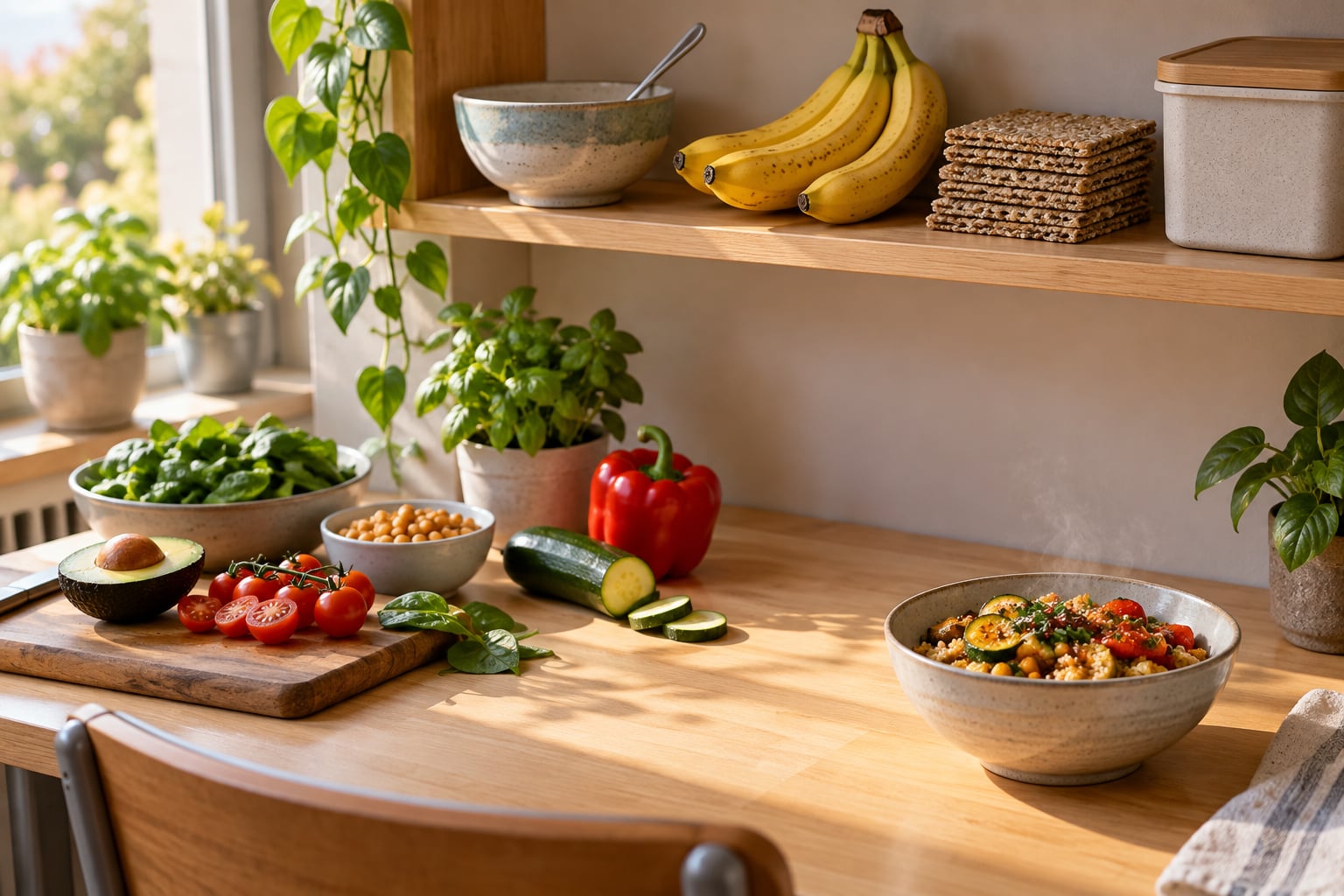
You do not need a perfect setup. Pick the track that matches what you can use most days.
| Your track | What it means | Meals that fit easily |
|---|---|---|
| Shelf stable only | No dependable refrigeration or heat in the room | Nut or seed butter wraps, tuna and crackers, bean salads, cereal with a single-serving shelf-stable milk |
| Cold storage, no cooking | A fridge is dependable, but heat is not | Yogurt bowls, hummus wraps, cheese and fruit plates, chilled bean and grain salads |
| Mini fridge and microwave | You can safely chill food and heat it in an approved microwave | Oats, topped potatoes, rice bowls, soup, steamed vegetables, reheated leftovers |
A communal kitchen can be a welcome extra without becoming the foundation of your week. If it is two floors away, often occupied, or missing the pan you expected, you still have food in the room. The same goes for a shared lounge microwave. Count it as regular access only if you can genuinely see yourself using it after a long class day.
Even shelf-stable food needs somewhere clean to land. A basic kit can stay very small:
Drinking water access matters too. Find out where you can fill a bottle and where food scraps may go. A bathroom sink may not be an approved place for food preparation or dishwashing, so check your building's guidance rather than assuming.
Keep the kit restrained at first. A single bowl that handles oatmeal, soup, and a rice bowl earns its space. A collection of single-purpose gadgets usually does not. You can always add something after you notice a real need.
University move-in guidance often recommends coordinating shared items before arrival because it saves both space and money. For food, the conversation can be plain:
Writing your name on a food container is different from assuming every utensil in the room is communal. Decide early, then adjust if the arrangement is awkward. If you split the cost of an appliance, agree on what happens at the end of the year while the receipt and conversation are still easy to find.
Your room does not have to imitate a kitchen. The aim is much smaller and more useful: breakfast before an early lecture, something decent between the dining hall and an evening lab, or a warm bowl when you get back late. Build for those moments, and the setup can stay calm enough to live beside.
Open the fridge at 9 p.m. and you may not see a meal. You see half a tub of yogurt, one tortilla, an apple, and a spoonful of salsa. That is enough to begin. Instead of searching for a recipe that matches every item, put together four loose parts: protein, produce, a filling carbohydrate, and something that brings flavor or richness.
These parts are a guide, not a rule about how a plate must look.
Protein can help a meal stay with you. In a dorm, easy options include beans, lentils, tuna or salmon pouches, nut or seed butter, roasted chickpeas, shelf-stable milk, yogurt, eggs, cheese, hummus, tofu, and fully cooked chicken. Availability, price, dietary needs, and storage all matter more than finding one supposedly perfect choice.
If the amount you have seems small, two foods can share the space. Hummus with pumpkin seeds, yogurt with nuts, or beans with a little cheese can all make a meal feel more substantial.
Produce brings colour, crispness, sweetness, acidity, and fibre. Fresh is one option, not the only option. Dried fruit fits a shelf-only room. Canned corn or tomatoes can brighten a bean bowl. Frozen peas and broccoli are useful when you have a freezer compartment that truly keeps them frozen. Apples, oranges, bananas, carrots, and cherry tomatoes need very little preparation.
Fibre is found in plant foods including produce, beans, nuts, seeds, and whole grains. Along with choosing foods you enjoy, including some of these can help a meal hold up better.
Bread, tortillas, oats, cereal, rice cups, potatoes, crackers, and precooked grain pouches give a meal substance. Carbohydrates are a main source of energy for the body, which is a practical reason not to treat them like an optional garnish. Whole-grain versions can add fibre, but the food you can afford, store, prepare, and happily eat is a sound place to start.
A sustaining carbohydrate is simply the starchy part that makes the meal feel like enough. For breakfast it might be oats. For a late dinner it could be a soft microwave potato or warm rice.
Salsa, olive oil, cheese, avocado, nuts, seeds, hot sauce, dried herbs, and seasoning can turn a collection of sensible foods into something you want to finish. Fat is also one of the main nutrients that supplies food energy. Here, the point is just as much pleasure: creamy yogurt cools a spicy bowl, olive oil softens a sharp bean salad, and toasted nuts make oatmeal more interesting.
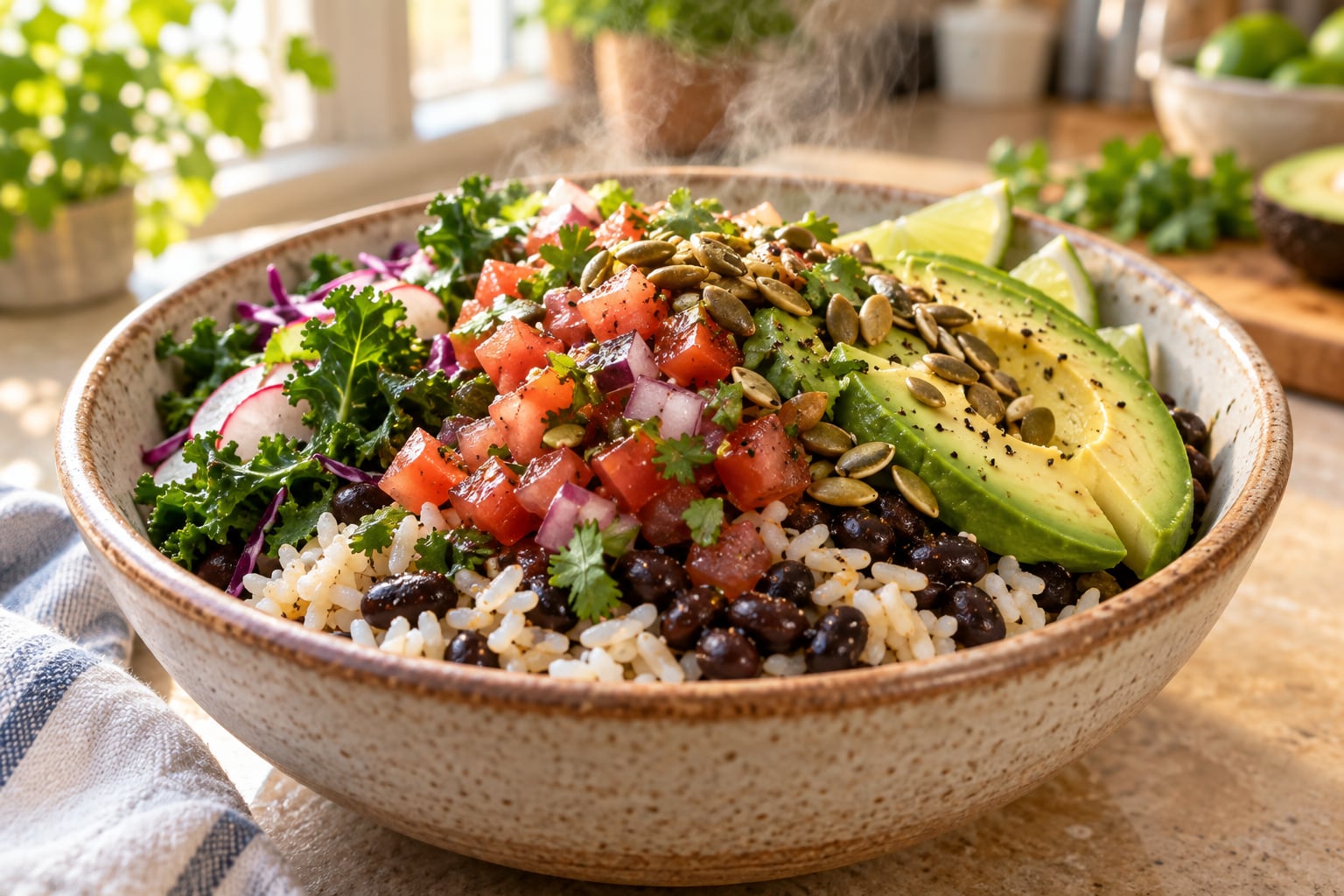
| Part | Shelf stable choices | Mini fridge choices | Microwave choices |
|---|---|---|---|
| Protein | Tuna pouch, pull-top beans, nut or seed butter, roasted chickpeas, shelf-stable milk | Yogurt, hummus, cheese, tofu, hard-cooked eggs | Warm beans, scrambled egg, fully cooked chicken, lentil soup |
| Produce | Apples, oranges, bananas, dried fruit, unopened canned produce | Berries, baby carrots, leafy greens, grapes, cut vegetables | Frozen vegetables, canned corn, warmed tomatoes, baked potato toppings |
| Filling carbohydrate | Bread, tortilla, crackers, cereal, ready-to-eat grain pouch | Overnight oats, chilled grain salad, pita | Oatmeal, rice cup, potato, soup with bread |
| Flavor or richness | Nuts, seeds, olive oil packet, shelf-stable hot sauce, dried seasoning | Salsa, avocado, cheese, yogurt dressing | Melted cheese, warm spices, toasted nuts added after heating |
Read the package before treating an item as ready to eat or shelf stable. A grain pouch may be fully cooked yet intended for heating, while another may be labeled ready to eat. Shelf-stable milk can sit unopened at room temperature, but it generally needs refrigeration after opening according to its label.
Suppose lunch is crackers and an apple. The crunch is lovely, but you are hungry again before the next class. Rather than declaring lunch a failure, look for the quiet gap. A tuna pouch, nut butter, cheese, or roasted chickpeas would add protein. If you have hummus but no crackers, spread it over a tortilla and add tomatoes. If a rice cup and beans taste flat, salsa or olive oil may be the missing part rather than more food.
Sometimes the answer is simply a larger amount. Your appetite changes with your day, and no table can decide the right portion for you. A two-hour gap may call for yogurt and fruit. A long afternoon of classes may call for yogurt, fruit, cereal, and nuts, with enough of each to feel satisfied.
Not every meal needs all four parts in obvious separate piles. Beans bring both protein and carbohydrate. Nuts offer protein, fat, and texture. Fruit contributes carbohydrate as well as produce. The guide is most helpful when it gives you an idea for what to add, then gets out of the way so you can eat.
You have read chapters 1 to 2 of 10: room setup and the four-part meal builder. The rest covers shopping, food safety, shelf-stable meals, fridge and microwave use, meal combinations, the dining hall, shared-space habits, and your first week.
Choose food around the storage, heating, and washing options you actually have.
Use the four-part builder to turn separate foods into a meal without tracking.
Buy versatile foods in small amounts and let what you finish guide your next shop.
Use the guide's temperature, time, handling, and reheating advice as you plan meals.
The 29-page PDF covers the four-part meal builder, tiny pantry shopping, shelf-stable meals, mini fridge and microwave use, food safety, dining hall ingredients, and first-week setup.
$3.97
Build your dorm meals29-page PDF · no subscription · works on any device
Without a way to combine and restock foods, it is easy to keep buying ingredients that do not quite become meals.