 Hush Pantry
Quiet, practical food advice
Hush Pantry
Quiet, practical food advice
Hush Pantry
Quiet, practical food advice
Hush Pantry
Quiet, practical food advice
For beginners tired of diet rules. A downloadable 21-page PDF for putting balanced meals together with the food you eat.

You want to eat well, but every food rule gives you something else to check. A light lunch can start to feel like a mistake you need to fix. That makes it harder to notice what the meal needs and move on.
Use a four-part builder, adjust it to your appetite, and apply it to meals you already eat.
Put protein, fiber-rich plants, a starchy base, and flexible fat together as a starting point.
Use proportions as cues, then adjust for your appetite and the situation.
Look at a familiar meal and decide what to add if it feels light.
Think through how to make balanced meals easier to put together.
Practice using the builder across meals without treating one plate as pass or fail.
The guide has 11 chapters. The first two are shown here in full so you can judge whether this approach fits before buying.
There is a particular kind of tiredness that arrives before a meal has even begun. You open the fridge, see eggs, leftover rice, a handful of spinach, and then remember six conflicting bits of advice about carbs, protein, timing, and sugar. Suddenly the easy meal feels suspicious.
Nutrition guidance is usually talking about the pattern of foods and drinks you have over time. The NHS puts this plainly: balance does not have to happen at every meal and can be considered across a day or a week. That is a much kinder scale for ordinary life. Toast and eggs at breakfast, a hurried sandwich at lunch, and a vegetable-heavy supper can all belong to the same week without any of them needing to prove a point on their own.
This does not mean meals are beyond notice. It means one meal is only one meal. A bowl of noodles with greens and tofu can be a lovely dinner. So can soup and bread, or a takeaway shared with friends. You can pay attention to what leaves you full and happy to have eaten, then use the next meal as another chance to add what sounds good.
The broad food groups in public guidance are a helpful backdrop, not a test you must pass. Fruit and vegetables, starchy foods, protein foods, dairy or alternatives, and oils all have a place in the bigger picture. This guide narrows that picture into four easy things to spot at mealtimes. It is meant to reduce the number of decisions, not give you a new set of rules to carry around.
General advice has limits. If you are pregnant, managing an allergy or a medical condition, following a prescribed eating plan, or recovering from an eating disorder, a clinician or registered dietitian can help tailor food guidance to your situation. For everyone else, begin here: make the next meal that is in front of you, and let the rest of the week be the rest of the week.
Think of a plate of warm rice, roasted broccoli, salmon, and a slick of lemony olive oil. Nothing about it needs a special name. It simply has a few things that tend to make a meal feel more complete.
Here is the starting picture: make plenty of room for vegetables or fruit, then include a protein food and a starchy food. Add fat where it makes the meal taste better, often in the pan, dressing, sauce, nuts, avocado, or cheese. Harvard's Healthy Eating Plate uses a similar visual cue, with about half the plate for vegetables and fruit and the other half shared between whole grains and protein. Treat that picture as a nudge, not a ruler. A soup bowl, a taco, and a sandwich will not look like divided plates, and they do not need to.
| Part to notice | What it brings to the meal | Everyday choices | Foods that do double duty |
|---|---|---|---|
| Protein | Amino acids and staying power | Eggs, yogurt, fish, chicken, tofu, lentils | Beans, Greek yogurt, edamame |
| Plants with fibre | Fibre, vitamins, minerals, colour and crunch | Broccoli, tomatoes, spinach, berries, apples | Lentils, peas, sweetcorn |
| Starchy base | Energy and a satisfying base | Oats, potatoes, rice, pasta, bread, corn tortillas | Beans and whole grains add fibre too |
| Fat for flavour | Richness and help absorbing some vitamins | Olive oil, nuts, seeds, avocado, fish | Nut butter, tahini, full-flavoured dressings |
Beans are especially handy. They can be the protein in a chilli and part of the fibre-rich plant side at the same time. Potatoes are a starchy base, even if they arrive alongside greens. There is no need to force every ingredient into one little box.
A drink can sit alongside the meal without becoming another thing to calculate. Water is an easy default. Unsweetened tea or coffee can fit too. If you enjoy something else, enjoy it. The plate is there to help with food decisions, not to police your glass.
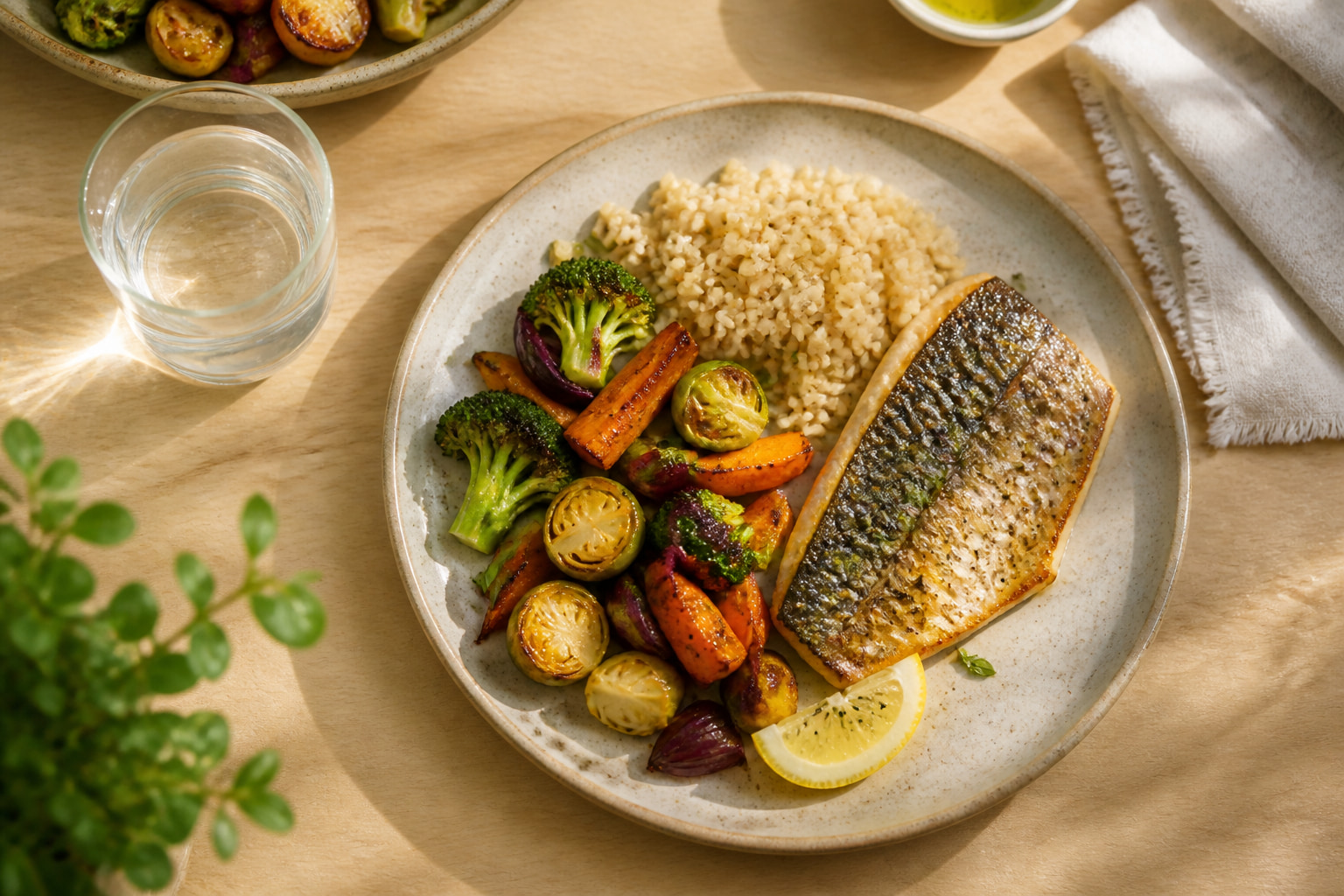
Start by looking for what is already there. Pasta with tomato sauce and Parmesan has a starchy base, plants, and some fat. Adding chickpeas or a side of greens may make it hold up better for you. That is all the builder asks: notice, then add only if you want to.
You have read chapters 1 to 2 of 11: Healthy Eating Without the Food Rule Spiral and The Four Part Meal Builder. The rest covers portions, food groups, meals you already eat, kitchen setup, busy and social days, sticking points, and your first week.
Use the four-part builder as a starting point instead of checking every bite against a rule.
Look at what is on your plate and add something when a meal feels light.
Let appetite and context guide your portions rather than treating proportions as fixed targets.
The 21-page PDF covers the four-part meal builder, personal portions, everyday foods, kitchen setup, busy and social days, sticking points, and your first week of balanced enough meals.
$3.97
Get the starter kit21-page PDF · no subscription · works on any device
You can keep weighing each plate against another food rule, or start with a flexible way to build on what you already eat.