 Hush Pantry
Quiet, practical food advice
Hush Pantry
Quiet, practical food advice
Hush Pantry
Quiet, practical food advice
Hush Pantry
Quiet, practical food advice
For adults cooking for one, this downloadable 27-page PDF helps you buy usable amounts and make meals from flexible components.
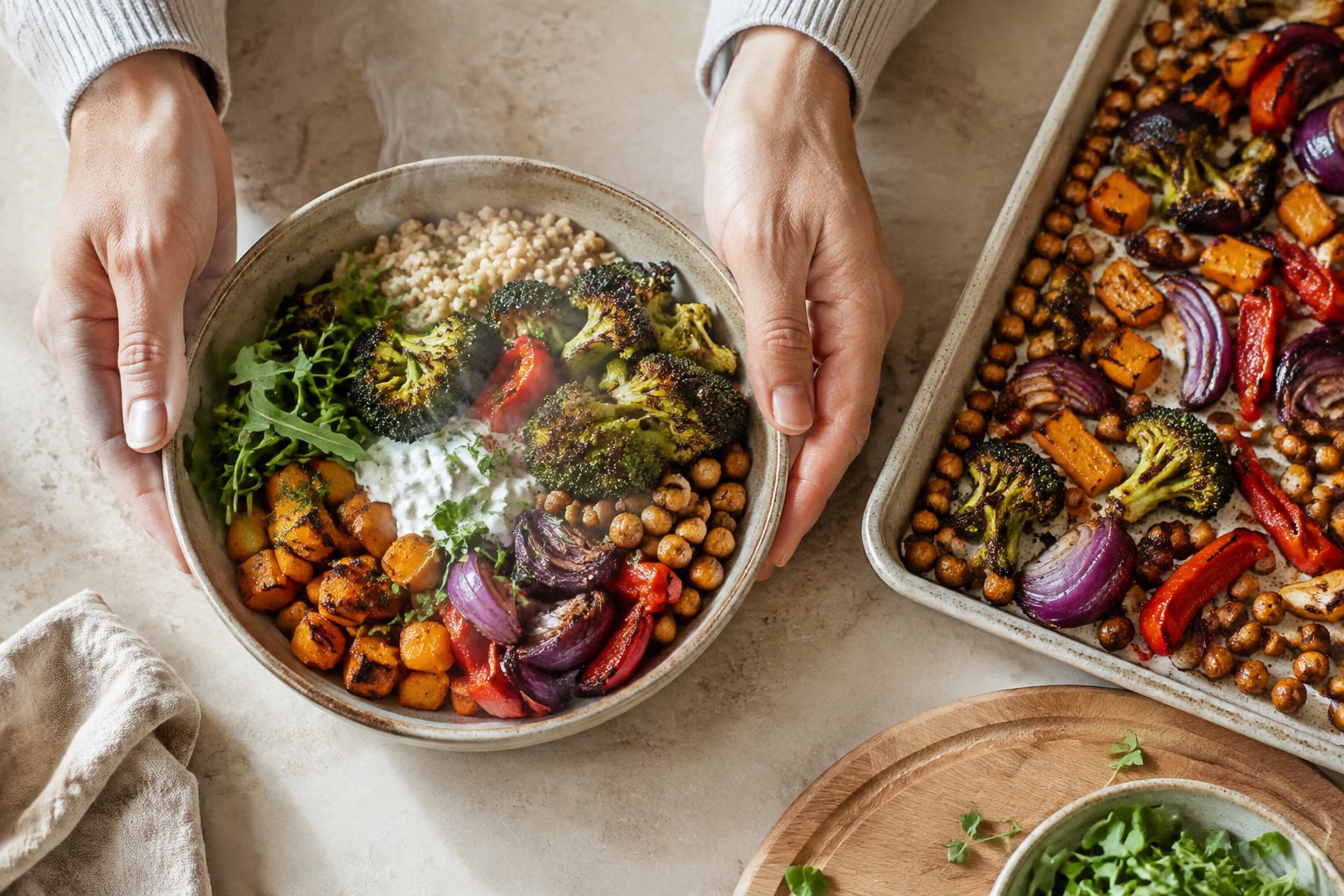
You buy food with a good week in mind, then the week changes. Ingredients wait in the fridge while you decide what to make. Cooking for one gets easier when you plan around the meals you can actually eat.
Plan from your real week, build meals from components, and keep food moving to the plate or freezer.
Use the planning approach to match what you buy to the meals you can honestly make.
Combine protein, plants, a base and flavor when you need a meal without a set recipe.
Think through how much of each food your week can use before you buy it.
Keep urgent food visible, then decide whether to eat, prepare or freeze it.
See how component cooking can turn one preparation into distinct meals.
The guide has 10 chapters. The first two are shown in full below, so you can judge whether its approach fits your kitchen before buying.
Picture the familiar sequence. You buy parsley for one recipe, open a tub of yogurt for another, and make a dish written for four. By Thursday, you have three servings of the same dinner but no appetite for it, while the parsley has gone soft behind a larger container. The problem began well before anything reached the bin.
Recipes and food packs often assume several people will help finish them. One person has fewer chances to use a perishable ingredient, and those chances move around. Appetite changes. A friend suggests dinner. A late meeting turns cooking into toast and eggs. A plan that only works when every meal happens exactly as written is fragile by design.
It helps to think less about a perfect menu and more about where the food is headed. Most things in your kitchen sit in one of five everyday states:
This is not a one-way march. Half of tonight's cooked rice can become tomorrow's lunch, or cool quickly and go into the freezer. A pepper intended for a salad can be roasted when it starts to soften. The useful question is simply, "What happens to this next?"
Four qualities make that next answer clearer.
How quickly it changes. Tender leaves and ripe berries give you less time than oats or frozen spinach. They deserve earlier attention, not a stern promise that you will somehow eat faster.
How easily it divides. Eggs, bread slices, frozen vegetables, tortillas, and loose produce let you take what you need. A large dressed salad or an opened delicate cheese is harder to pause once its best window has begun.
How many meals welcome it. Roast peppers can go beside eggs, into pasta, through a grain bowl, or inside a toasted sandwich. A specialist ingredient bought for one teaspoon has fewer easy exits.
Whether you can see it. Food at eye level in a clear container asks to be eaten. A small leftover behind a stockpot is quiet enough to disappear.
These are purchasing clues, but they also guide what to cook first. If you bring home tender greens, potatoes, eggs, canned beans, and frozen corn, the greens get a near meal. The potatoes can wait somewhere cool and dark. Eggs offer several options, while the beans and corn give you breathing room.
Waste can begin at any point. You might buy more than the week can hold, store a vegetable in the wrong place, cook six portions without a plan, serve more than you want, or keep a leftover until it no longer appeals. Noticing the exact point matters because each one has a different fix. Smaller quantities will not help much if the real issue is that cooked food gets hidden. More meal planning will not help if an ambitious Sunday session leaves you tired of everything by Tuesday.
The aim here is dependable, enjoyable eating with an amount of effort you can live with. Some weeks will include takeaway. A bunch of herbs may still get away from you. Perfect compliance and literal zero waste are poor measures of whether your kitchen is working. A warm dinner you wanted to eat, followed by a sensibly packed lunch and one freezer portion for next week, is a much better sign.
Before you choose recipes, look at the week itself. If Wednesday dinner is with friends, Friday is uncertain, and you already have soup in the freezer, those facts belong in the food plan. Seven days do not equal seven home-cooked dinners.
Start by counting the times you genuinely expect to eat at home. Call each one an eating opportunity: breakfast before work, a packed lunch, dinner after the gym, or any other time food from your kitchen could reasonably be eaten. Subtract meals provided at work, restaurant plans, travel, regular takeout, and anything else already spoken for. If a plan is tentative, leave it tentative.
Then open the fridge, freezer, and pantry. This is a quick scan, not a cataloguing project. Note food that has a short window, prepared portions, and ingredients you already know you want to use. Those foods claim the first suitable openings. A container of lentil soup might cover Tuesday lunch. Half a cabbage can become two crunchy slaws. Frozen dumplings can wait as a rescue dinner rather than taking an immediate slot.
A flex slot is a meal you deliberately do not plan in detail. It can absorb a change of appetite, an invitation, a tiring day, or the odds and ends that need finishing. For many solo weeks, one flexible lunch and one flexible dinner are a useful starting point. A busier or less predictable week may need more.
That empty space can feel strange if you are used to filling a seven-day grid. In practice, it keeps a small surprise from breaking the whole plan. If Thursday dinner moves out, Friday's flex meal takes the food intended for Thursday. If everything happens as expected, the flex meal becomes scrambled eggs on toast, a freezer portion, or a plate of hummus, vegetables, cheese, and warm bread.
Keep cooking projects separate from dependable meals. A new dumpling recipe may be exactly how you want to spend Sunday afternoon. It still needs an honest answer to two questions: how many portions will it make, and where will they go? One project can be plenty in a week that already has several perishable ingredients. The rest can be easy food you know you like.
Here is a compact way to plan a week before shopping:
| Check | What to write down | Example for one person |
|---|---|---|
| Meals likely at home | Real openings after outside plans | 5 breakfasts, 4 lunches, 4 dinners |
| Food already waiting | Prepared food and short-window ingredients | 1 soup lunch, greens for 2 meals, 1 frozen dinner |
| New food needed | Openings not already covered | 3 breakfasts, 2 lunches, 3 dinners |
| Flex space | Openings left deliberately loose | 1 lunch, 1 dinner |
| Fridge and freezer room | Containers and portions that can actually fit | 2 fridge portions, 3 small freezer portions |
The arithmetic is intentionally rough. One pot of beans might cover part of three meals, while a dinner out could become tomorrow's lunch if you bring food home. You are looking for scale, not a binding schedule.
Cold-storage space matters before cooking, not after. If your freezer has room for only two flat containers, a six-portion stew needs another destination. You might halve the recipe, invite someone to eat, or wait until the freezer is clearer. The same goes for a packed refrigerator: fresh berries, a large salad, cooked rice, and several meal boxes all need visible, safely chilled space.
Finish by translating the plan into broad meal shapes rather than ten separate recipes. You might choose oats or eggs for breakfast, two lunches built around soup and greens, and dinners that share rice, roasted vegetables, and either beans or fish. The foods overlap, but the finished plates do not have to. That is enough structure to make a useful list while keeping Tuesday night free to be Tuesday night.
You have read chapters 1 to 2 of 10: The Solo Kitchen as a Flow System and Plan From Reality, Not an Ideal Week. The rest covers building meals, shopping quantities, food storage decisions, component cooking and adjusting your system.
Buy in usable quantities by planning around the meals your schedule can absorb.
Put a meal together from protein, plants, a base and flavor components.
Keep urgent items visible so you can choose to eat, prepare or freeze them.
The 27-page PDF covers realistic planning, usable shopping quantities, component-based meals, fridge and freezer decisions, a working week for one and ways to adjust the system when it is not working.
$3.97
Get the guide27-page PDF · no subscription · works on any device
Without a workable way to buy, use and store food, it is easy to keep finding ingredients too late.