 Hush Pantry
Quiet, practical food advice
Hush Pantry
Quiet, practical food advice
Hush Pantry
Quiet, practical food advice
Hush Pantry
Quiet, practical food advice
For packaged food shoppers who want a calmer way to compare choices. A downloadable 17-page PDF.
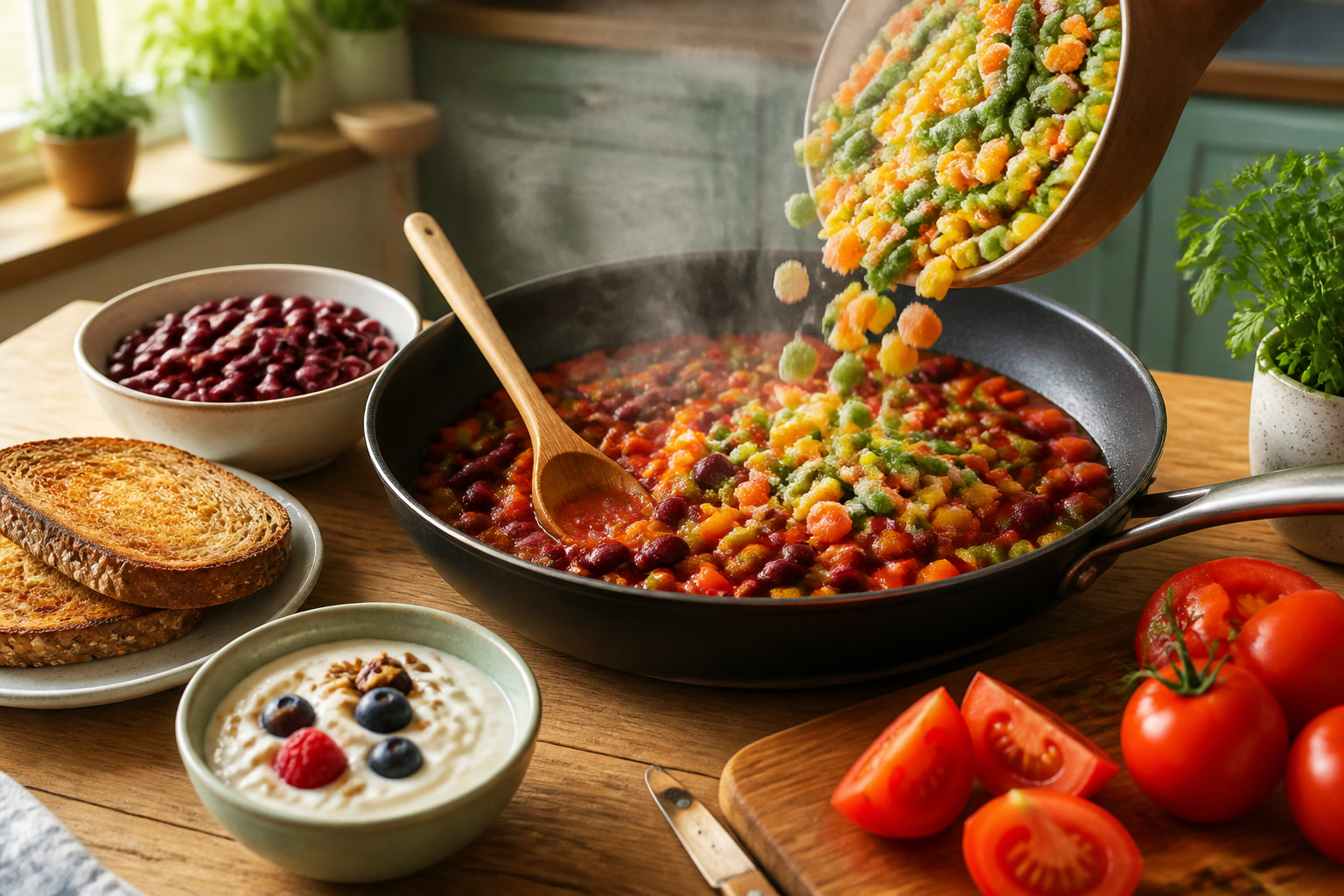
You pick up a packaged food and wonder whether the label tells you enough to make a good choice. If every ingredient becomes a reason to put it back, comparing foods gets harder than it needs to be. You need a way to consider the label and what the food will do in your meal.
Start with processing, then read the label and consider the food's role in your meal.
Use this chapter to think beyond a simple processed or unprocessed label.
Work through processing and the nutrition label before deciding how a food fits.
Follow examples of packaged food comparisons and apply the same questions while shopping.
Use the closing routine to bring the guide's approach into your next shop.
The guide has 11 chapters. The first two are shown in full below so you can judge whether the approach fits before buying.
Picture the trolley for an ordinary week: a tin of beans for a fast tomatoey supper, frozen peas for a handful of green at dinner, bread for tomorrow's sandwich, yogurt for breakfast, a bottle of soda, and biscuits for the cupboard. They are all packaged. They are plainly not interchangeable.
That is why a package is a poor first verdict. Food is washed, cut, chilled, frozen, canned, dried, mixed, and packed for plenty of reasons. Some of those steps help food last, travel safely, or make dinner possible when you have ten minutes and one clean pan. Frozen vegetables and canned beans can be a very welcome sight at 7pm.
The louder question around ultra-processed food can make every packet feel suspect before you have even looked at it. A calmer starting point is: what is this food, and what do I need from it today? A yogurt might be breakfast. Bread might be the base for eggs and sliced tomato. A fizzy drink might simply be a drink you feel like having. The label can help you answer different questions for each one.
You do not have to make every purchase carry the whole week. Start with the food in your hand, the meal you imagine making, and the facts the package actually gives you. That is enough to begin.
Processing is a broad word. It covers the quiet everyday things that make food easier to keep and cook, from freezing peas and pasteurizing milk to grinding oats or canning tomatoes. By that definition, nearly everything in a supermarket has been processed in some way. The word alone cannot tell you how a food tastes, how filling it is, or what the rest of your meal looks like.
One common way of sorting this out is called NOVA. It groups foods by the nature, extent, and purpose of processing. It can be useful for noticing patterns, but it is not a nutrition scorecard and it does not settle every borderline food.
| NOVA group | What it describes | Familiar examples |
|---|---|---|
| 1. Unprocessed or minimally processed | Foods changed mainly to store, prepare, or make them safe to eat | Frozen vegetables, milk, plain yogurt, oats, dried beans |
| 2. Processed culinary ingredients | Ingredients extracted or refined for cooking and seasoning | Oils, butter, sugar, salt, vinegar |
| 3. Processed foods | Foods made by adding salt, sugar, or fat to foods from earlier groups | Canned fish, some cheeses, some breads, canned vegetables |
| 4. Ultra-processed foods | Industrial formulations with several ingredients and often additives for flavour, texture, shelf life, or convenience | Many sodas, biscuits, chips, frozen dinners, and some cereals |
That last group is where most of the debate lives. A long ingredient list or an unfamiliar word can be a clue that a product is more formulated, but neither is a reliable shortcut on its own. An ingredient name may describe a vitamin, a thickener, a preservative, or a form of an ordinary food substance. The useful next question is still the same: what is this food made to do, and what does it bring to the meal?
There are grey areas. Plain yogurt is commonly placed in the minimally processed group, while a sweetened fruit yogurt may land in a different group depending on its ingredients. Bread, tofu, fortified cereal, and plant drinks can prompt similar disagreement. That ambiguity is a reason to use the category as context, then turn to the label for the details you can actually compare.
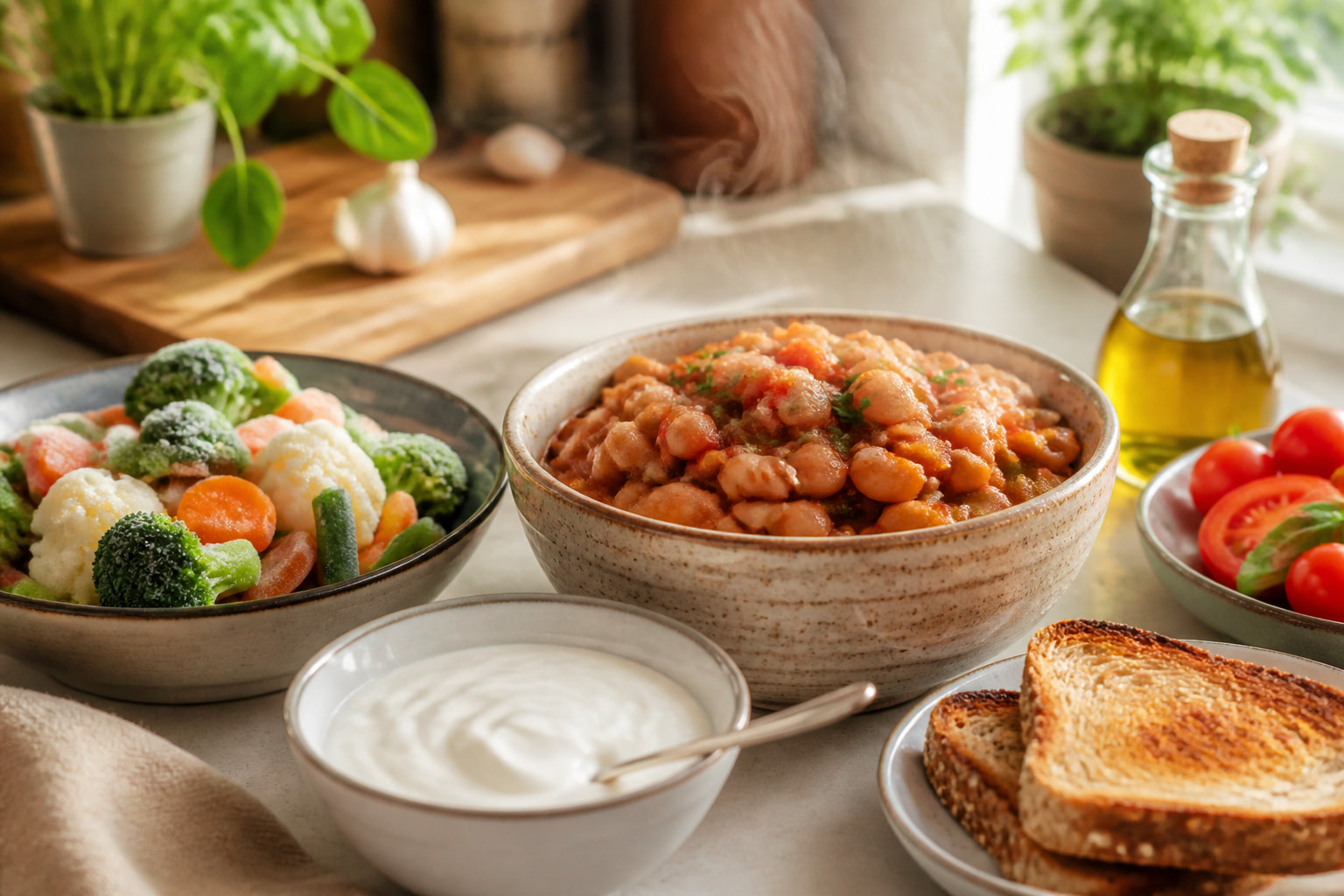
You've read chapters 1 to 2 of 11: The Package Problem and Processing Is a Spectrum. The rest covers evidence, the decision tree, labels, grocery aisle comparisons, convenient meals, personal needs, and a shopping routine.
Make a more considered choice by looking at processing without treating packaging as a verdict.
Focus your comparison by starting with the serving and reading ingredients without fear.
Decide how a food fits by considering its job in the meal, not whether it wins every comparison.
The 17-page PDF covers processing, label reading, a two-lens decision tree, worked grocery aisle comparisons, convenient foods in meals, and a routine for your next shop.
$3.97
Get the guide17-page PDF · no subscription · works on any device
Without a way to compare, it's easy to keep judging foods by the package or the length of the ingredient list alone.